


TQ Morning Briefing
Nearly 100 years of data say this month is different. This year it comes with real tests.
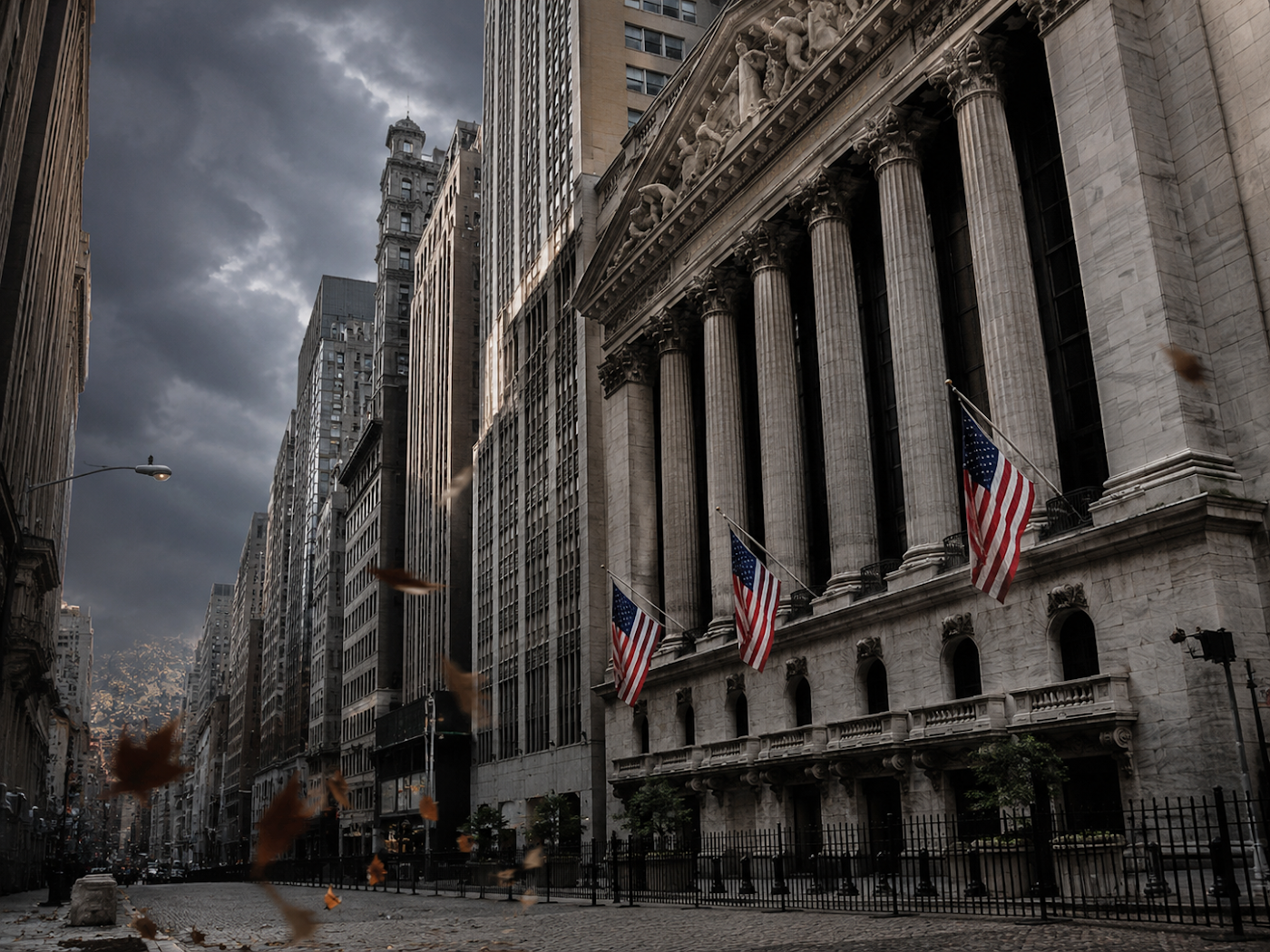
Markets are closed for Labor Day. So today we step back for a quick history lesson. Traders grumble about September. They fear October. There is a good reason for both. Seasonality does not drive markets on its own. But history shows these two months punch above their weight.
Before the AI Wealth Gap Widens, See This List
Blue-chip stability meets AI growth in 7 AI Stocks to Invest in Today
Inside: a top-10 dividend payer rolling out AI-powered logistics across 200 countries… a $300B titan embedding AI across its full product stack… and a semiconductor leader still trading 15% below its 52-week high.
All proven operators, all using AI to widen their lead.
See the list for free today – after that, you’ll have to pay.
September: The Market's Weakest Month
September has the worst track record on the calendar. Going back to 1928, S&P data shows it averages the weakest returns of any month. Traders call it the September Effect. Nobody fully agrees on why. Some point to tax-loss selling by mutual funds. Others point to rebalancing after summer.
The record speaks for itself. In 1931, deep in the Great Depression, U.S. stocks fell nearly 30% in September alone. In 1974, inflation, an oil shock, and recession fears drove a 12% drop. After 9/11 in 2001, the S&P 500 lost 8% for the month. Then came September 2008. Lehman failed, and a seasonal soft spot became a systemic shock. Stocks fell 9%.
Brutal Septembers
| Year | Event | U.S. Equity Decline |
| 1931 | Great Depression collapse | -30% |
| 1974 | Inflation + oil shock | -12% |
| 2001 | Post-9/11 downturn | -8% |
| 2008 | Lehman bankruptcy | -9% |
October: Crashes and Bottoms
If September grinds, October jolts. The most famous jolt came in 1929. The Dow fell 13% on October 28 and another 12% the next day. The Great Depression followed. On October 19, 1987, Black Monday, the Dow dropped 22% in one session. That is still the steepest one-day percentage drop on record. In October 2008, the financial crisis hit full force. The S&P 500 lost 17% that month.
But October also ends bear markets. The 2002 bear market bottomed on October 9. The 2011 correction bottomed on October 3. Both set up multi-year rallies. Traders call October the bear killer. It forces a reckoning, flushes out excess, and resets the tape.
Infamous Octobers
| Year | Event | U.S. Equity Decline |
| 1929 | Great Depression begins | -23% (two days) |
| 1987 | Black Monday | -20.5% (one session) |
| 2008 | Financial crisis escalation | -17% |
| 2018 | Rate-hike + growth scare | -7% |
Major Buy Alert Issued

Keith Kaplan has invested $17 million into his own AI research and tools. He's built a platform that 180,000 people worldwide use in the stock market. Now he says there's a handful of stocks you need to buy asap, to set yourself up for 1,000% potential returns in the near future. Here are the stocks you need to buy for the chance to profit.
This ad is sent on behalf of TradeSmith at 1125 N. Charles Street, Baltimore, Maryland 21201. If you're not interested in this opportunity, please click here.
This Year's Calendar Is Loaded
It is tempting to assume September weakness will replay on schedule. Treat seasonality as a backdrop, not a forecast. What matters is the calendar in front of us, and this one is heavy.
The August jobs report landed Friday. Producer prices hit Thursday, September 10. CPI follows Friday, September 11. Those are the last major inflation readings before the Fed meets September 15 and 16. The rate decision lands Wednesday afternoon, with fresh projections and a press conference. Retail sales print that same morning.
The debate has shifted. The question is no longer how fast the Fed can ease. It is whether sticky inflation, higher energy costs, and a still-solid economy force policy to stay tight, or get tighter. The answer reaches well beyond the funds rate.
Earnings add a second test. Oracle and Adobe report on enterprise tech spending and AI monetization. FedEx offers a read on global trade and shipping demand. Later in the month, Costco shows how the consumer is holding up. Micron puts the AI-driven memory cycle back under the microscope.
Buffett, Gates and Bezos Quietly Dumping Stocks—Here's Why
The world's wealthiest individuals are making huge moves with their money.
Warren Buffett just liquidated billions of shares. Bill Gates sold 500,000 shares of Microsoft. Jeff Bezos filed to sell Amazon shares worth $4.8 billion.
What is going on? One multi-millionaire believes they are preparing for a catastrophic event. But not a crash, bank run, or recession. It’s something we haven’t seen in America for more than a century.
What the Market Is Assuming
Treasury yields are the pressure point. The 10-year yield recently approached 4.8%. That raises borrowing costs and squeezes stock valuations. This market has kept rewarding long-duration growth stocks and AI names. A sustained move higher in yields would test that trade harder than any calendar effect.
Iran adds a feedback loop. Renewed fighting between the United States and Iran has pushed oil sharply higher. It has revived worries about flows through the Strait of Hormuz. Higher oil complicates the inflation picture. Stickier inflation can push yields and Fed expectations higher. The geopolitical story and the rates story now feed each other.
All of this hits a market with big assumptions priced in. Investors assume AI spending stays durable. They assume earnings keep growing. They assume the consumer absorbs higher prices. They assume higher rates will not derail the economy. September will produce evidence on nearly all of it.
15X Bigger Than SpaceX: Elon's New Launch

While the rest of the market goes crazy for "the mother of all IPOs", a new Elon Musk innovation is quietly being rolled out nationwide. It's been 27 years in the making, and it could have a radical impact on how millions of people manage their money… and even collect Social Security. Here's everything you need to know.
This ad is sent on behalf of InvestorPlace Media at 1125 N. Charles Street, Baltimore, Maryland 21201. If you're not interested in this opportunity, please click here.
Final Thoughts
September has earned its reputation. But history does not say whether stocks rise or fall over the next four weeks. It says markets get less forgiving when uncertainty piles up. This year, there is plenty of it.
The watchlist is clear: inflation, the Fed, oil, Iran, Treasury yields, and earnings. If inflation cools, oil settles, yields ease, and earnings hold, the September Effect stays a footnote. If those forces break the other way, seasonality gets reinforced by something stronger: a real repricing of growth, inflation, and rate expectations.
That is the real lesson from market history. September does not cause corrections. October does not cause crashes. Markets get vulnerable when expectations, positioning, and fundamentals fall out of line. The calendar just has a habit of surfacing those tensions.
History gives the warning. The next few weeks give the evidence.
Have a wonderful Labor Day. We'll be back tomorrow with our regularly scheduled programming.
FREE MARKET ALERTS
Know What’s Moving the Market Before You Miss the Move
Get market-moving news, analyst trade ideas, and key catalysts delivered directly to your phone so you can spot opportunities faster.