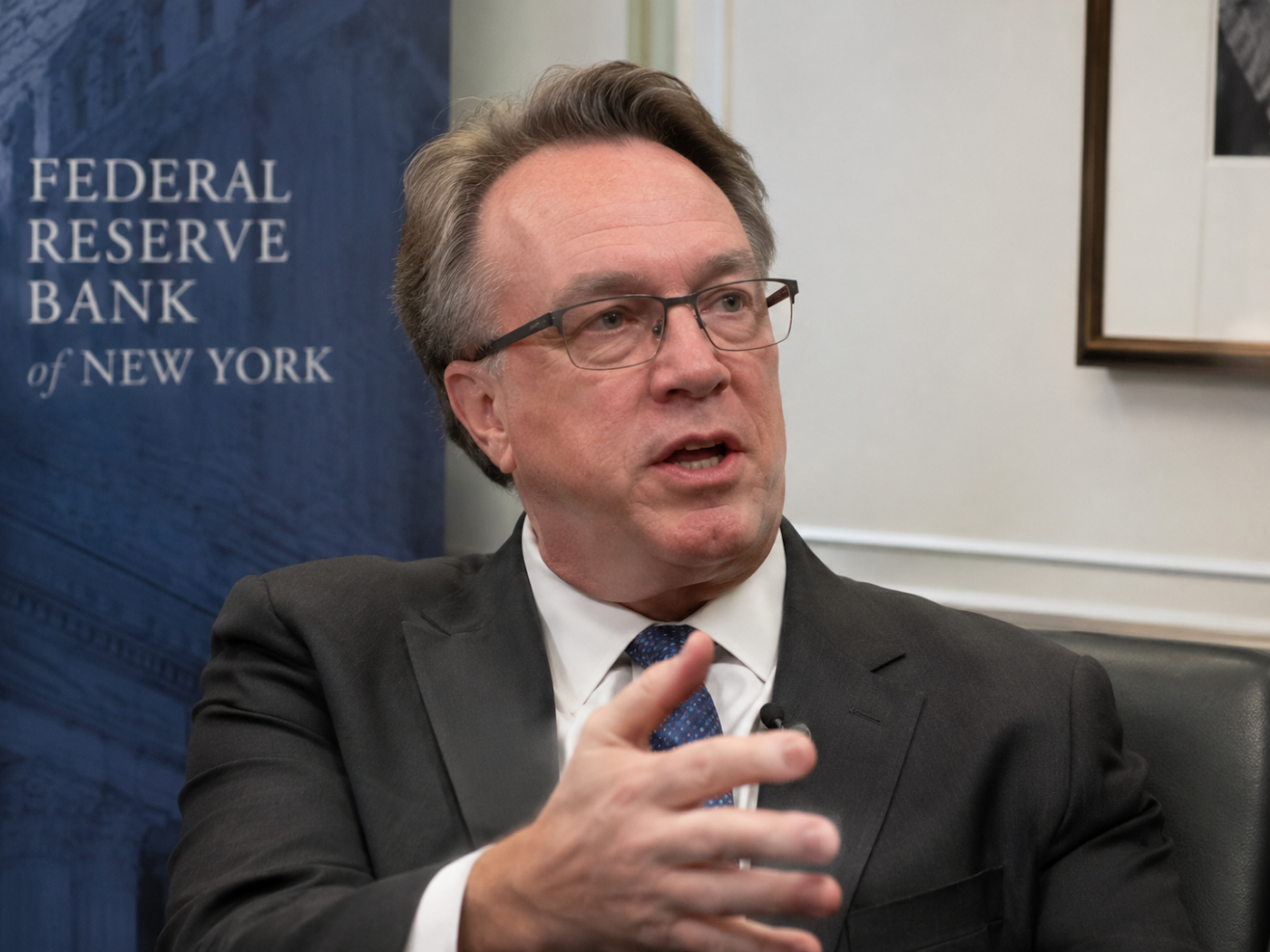
The week opened in a correction. Last Friday the S&P 500 fell 3.7%, its seventh straight loss. That left it nearly 12% below its October record. The VIX closed at 35.89, its highest close since April 2025. Then one board vote changed the mood. Nvidia brought back Huang on Monday, and the S&P 500 had its best day since April 2025. Through Wednesday it was up about 4% for the week, and it finished Friday's half-session up 5.7%. The relief was uneven. Chips fell hard on Tuesday while the Dow, health care and the equal-weight index rose. Credit barely joined in. Bitcoin funds kept losing money. The biggest change came in rates. Core inflation ran at its fastest pace in nearly three years. Growth was revised up. The 10-year yield fell anyway, to 4.85% on Wednesday. It was 5.15% on Nov. 13. The market decided three things. A December hike is settled, but a long hiking cycle is not. AI demand is no longer the question, its cost is. And price moves in crypto and Asian chips came from forced trades and policy floors more than new money. Stocks are at record highs. And everywhere you look, someone's predicting a crash. But Dr. Mark Skousen, the economist who told his readers to sell everything a few weeks before 1987's Black Monday, says they're missing what's really going on. "Something strange is happening today. You've probably sensed it." He says the next 12 months could make or break your retirement. For the time being, his briefing is free. Watch it before it comes down. The Data Ran Hot. Bonds Priced a Shorter Fed.Wednesday's data gave the hawks plenty. Third-quarter growth was revised to a 4.3% rate from 3.4%. Core PCE prices rose 3.3% from a year earlier, above the 3.2% expected. Jobless claims fell to 189,000. On Tuesday, consumer confidence jumped to a 22-month high. The 10-year yield fell about 6 basis points that day, to 4.85%. The rally began before the reports came out. Fed officials did not soften. Governor Lisa Cook said policy is "too accommodative." New York Fed President John Williams said inflation is "simply too high." He would not rule out hikes at back-to-back meetings. Traders kept the near-term path and cut the tail. Futures still price a December hike as close to certain. They put better-than-even odds on another by January. The odds of a third hike fell to about one in three, from even on Tuesday, CME FedWatch showed. The Fed's Beige Book described a slower economy. Four of 12 districts reported no change. Bonds are betting the stock selloff does part of the Fed's work. The debate moved from whether the Fed hikes to how long it keeps going. Hot data did not change that bet. Nvidia's 31% Day Bought One Session of CalmOn Monday, Nvidia (NVDA) rose 31.5% to $165.05 after its board brought Huang back. That added nearly $1 trillion in value. The Nasdaq rose 6.5%, and the VIX fell 26% to 26.62. The calm lasted one session. On Tuesday, the Philadelphia chip index fell 7.9% and Nvidia lost 5.9%. On Wednesday, the Nasdaq fell more than 4% at its low and the VIX neared 35. Most of that came back. Nvidia still closed down 3.9%, and Micron (MU) fell 4.5%. Under the surface, the market got broader. On Tuesday the Dow gained 0.9% and closed above 50,000. Health care rose 3%. The equal-weight S&P 500 fund rose 0.5% while the index itself slipped. On Wednesday the equal-weight fund gained 0.8% while the S&P 500 fell 0.2%. One stock's rescue lifted the index for a day. It did not calm volatility. Money moved toward rate-sensitive and defensive stocks and away from AI leaders. Why Did Trump Just Ban America's Most Powerful AI?It's not Nvidia. It's not OpenAI. It's not Google. It's a San Francisco AI lab whose technology is used by eight of the ten largest companies in America — and which Bloomberg calls the highest-revenue AI company on earth. Trump banned it from every federal agency and the Pentagon blacklisted it. The reason isn't what you think. Full details here. Margins, Not Demand, Sorted AI HardwareEvery big hardware report beat on sales. The stocks split on margins. Analog Devices (ADI) grew revenue 42%. It guided its operating margin down to about 50.5% from 52.3%. The stock fell 17%. Hewlett Packard Enterprise grew 50%, but its gross margin fell about 2 points. It fell 16%. Dell (DELL) more than doubled revenue to $54.9 billion. Its AI backlog hit a record $132.3 billion. Its server and storage margin rose to 17.0%. Dell guided it to just under 15% this quarter, Bloomberg said. The stock fell 11.8% before the report and ended Wednesday up 0.6%. Memory sits under all of it. Server makers are seeking up to 45% more on signed AI orders, a Financial Times report said. HP's PC margin fell to 3% from 5.8% on memory costs. In Seoul on Wednesday, Samsung fell 9.9% and SK hynix 11.1%. Demand is settled. Each new AI server now earns a thinner margin as memory costs climb. Margin per server is now the number AI hardware trades on. Louis Navellier: My #1 AI stock for 2026 (name & ticker inside)
"I want to give you a free stock pick today. This company's sales are up 28% year over year. It holds over 30,000 patents in wireless and video technology. And it just earned an A-rating in my proprietary Stock Grader system. That's the same system that helped me flag Nvidia back in 2005 — before its 82,000% run. In fact, this system has identified the top-performing S&P 500 stock for 12 years running. Over the years, it has cost me $9 million to build and maintain. And right now, it's flashing its highest possible rating on this AI play." — Louis Navellier Click here to see which AI stock my $9 million system is flagging right now, free. This ad is sent on behalf of InvestorPlace Media at 1125 N. Charles Street, Baltimore, Maryland 21201. If you're not interested in this opportunity, please click here. AI Borrowers Paid 8%. CoreWeave's Notes Yielded 17%.Credit did not join the rescue. On Monday, stocks had their best day since April 2025. The main high-yield bond ETF rose 0.25%. A day earlier, high-yield bond funds had sat at a 52-week low. The deals that got done paid up. About $44 billion of notes priced to fund SpaceX GPU purchases. The largest piece yielded 8.259%, Bloomberg said, against 5.95% for high-grade bonds. CleanSpark (CLSK) is paying 7.875% on secured notes for an AI data center. The weakest names took the worst of it. CoreWeave (CRWV) fell 11.8% on Tuesday. Its bonds due 2032 traded as low as 74.9 cents on the dollar. Its 2031 notes yielded more than 17% at their lows. Monday's relief over Huang barely reached credit. Private credit showed strain too. Houlihan Lokey said defaults rose to 1.5% of loans in the third quarter. They were 0.8% the quarter before. Lenders set the real cost of the AI build. That cost sits well above high-grade rates. It did not fall when stocks rallied. Bitcoin Funds Set a Monthly Outflow RecordBitcoin fell to about $55,100 last Saturday. That was its lowest since September 2024. About $2.4 billion of bets were wiped out in 24 hours. More than 90% were longs, CoinGlass said. Monday flushed the other side. Bitcoin jumped above $64,000 within an hour of Nvidia's news. About $420 million of bets were wiped out, most of them shorts. By late afternoon it was back near $61,100. The funds kept selling through both moves. Spot bitcoin funds lost $569.7 million on Monday, a fifth straight outflow. The largest fund lost $509.3 million on a day its shares rose. November outflows hit a record $5.39 billion through Wednesday, SoSoValue data show. The biggest corporate buyer stayed small. Strategy (MSTR) bought 457 bitcoin for $29.6 million. It spent about seven times as much on its own preferred stock. Bitcoin's price swung on forced trades in both directions. The steady money kept leaving. A bounce without inflows is a short squeeze, not a bottom. The REAL Reason Trump Is Invading Iran
For a moment… Forget about Trump’s ties to Israel. Forget about reports of Iran’s nuclear program. Because my research has led me to believe we’re risking World War 3 with Iran for a completely different reason. Click here to find out what it is. If you have even a single dollar invested in the U.S. stock market, this is going to directly impact you. Discover the reason here. Asia's Chip Markets Swung 9% Under New Policy FloorsTaiwan banned short sales below the prior close starting Monday. Korea readied a market support fund it last used in 2008. Beijing told its state-backed investors to steady stocks. Prices whipsawed under those floors. Taiwan's Taiex jumped 9.0% on Tuesday. That was its biggest point gain on record. It lost 4.8% the next day. Korea's Kospi rose 6.3%, then fell 6.2% as a curb on program selling kicked in. On Friday, Shanghai's STAR 50 tech index closed up about 15%. Trade policy added weight. Washington proposed tariffs of up to 15% for Japan, Korea, Taiwan and the EU. That matches the caps in their trade deals. Fallback rates reach 25% for Korea and Taiwan. In U.S. trading Wednesday, Korea and Taiwan funds fell while a Japan fund rose under the same cap. Nvidia also told server makers to pause shipments to four Southeast Asian markets, people close to the matter said. A short ban removes one seller. A state fund adds one buyer. Neither changes chip earnings, so the swings stayed large. Big Pharma’s new ‘AI co-scientist’ |
|