


SATURDAY RECAP
Walmart had its worst day in four years and told you why. Treasury doubled bond buybacks and the market erased the move in 24 hours. US debt crossed $40 trillion. Barely one factory in five could raise a price. Six stories made the week.Your Bank Is In Danger (From Elon)
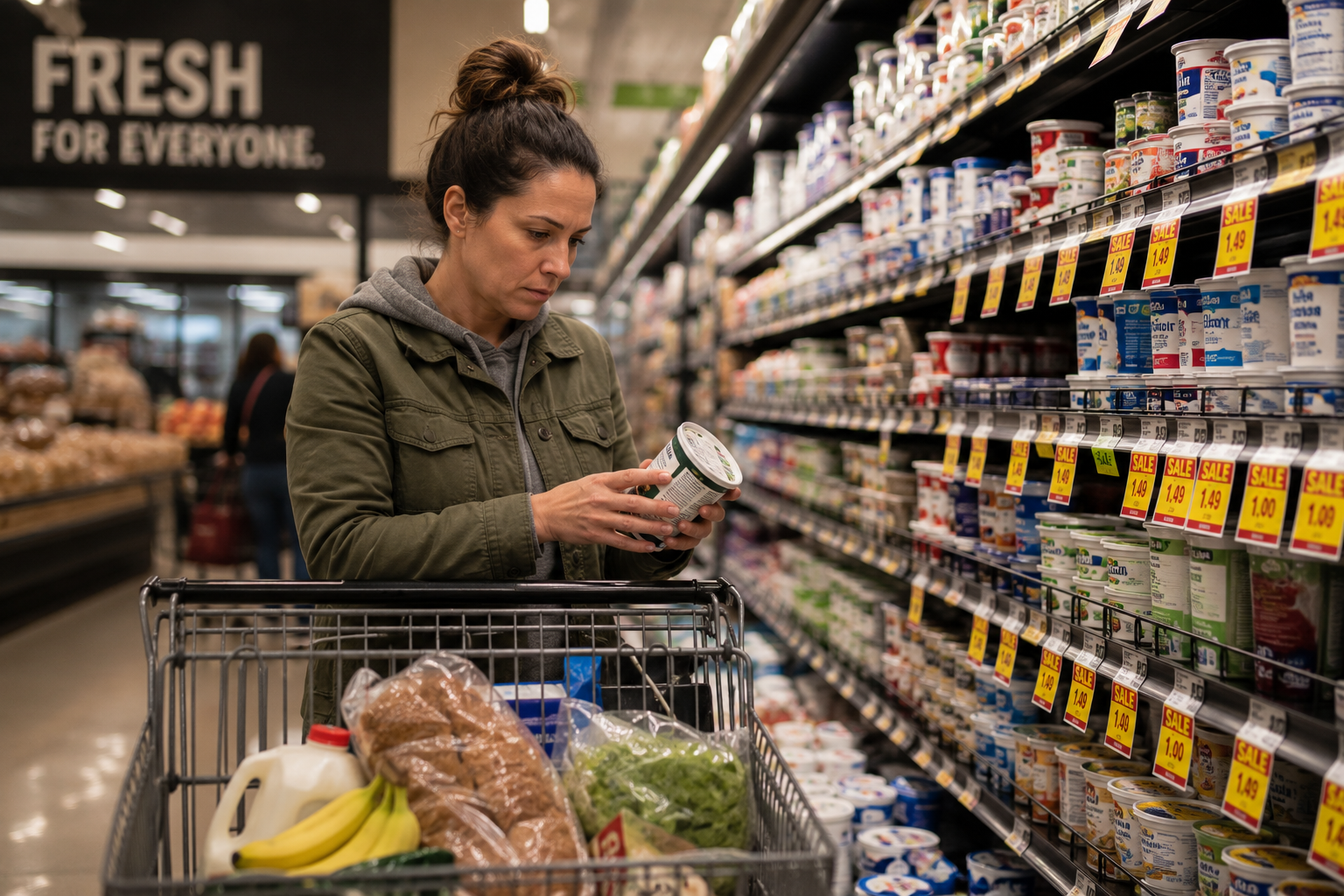
The consumer reported from every angle and the answer was the same. Treasury tried to talk the long end down and failed inside a day. The week was about who still gets to set terms.
Monday ran two tapes at once. Tuesday every chip stock fell and the 30 year hit a 19 year high. Wednesday Treasury blinked and yields crashed. Thursday Walmart took more than 700 points off the Dow. Friday sorted retail by who still sets the price. Six themes ran the tape.
Mode Mobile won't be under-the-radar much longer.
The price on pre-IPO shares goes up soon — and over 60,000 investors have already put in more than $100 million, including Shark Tank's Kevin Harrington.
Mode is still private — but the Nasdaq ticker $MODE is already secured. And this price change could signal a public listing is getting closer.
The traction is already there:
- 490M+ users
- $115M+ lifetime revenue
- $1B+ earned and saved by users
- 170+ countries served
- Deloitte's #1 fastest-growing software company in North America — 32,481% growth
Uber turned cars into taxis. Airbnb turned homes into hotels. Mode is turning everyday phone use into something that pays you back.
This isn't early-stage hype. It's about timing.
Walmart said its shoppers are choosing between necessities.
Walmart (WMT) fell nearly 9 percent Thursday, its worst session since May 2022. US comparable sales grew 2.6 percent against a 3.5 percent estimate. Third quarter earnings guidance came in at 62 to 64 cents against a 68 cent consensus.
CFO John David Rainey said it plainly. Shoppers appear to be choosing between necessities because of where gas prices are.
Few companies see more of the American household than Walmart. That sentence is the consumer verdict this letter has been waiting three weeks to hear.
The rest of the week agreed. Lowe's (LOW) posted comparable growth of 0.2 percent. Advance Auto Parts (AAP) fell almost 25 percent. Home Depot (HD) beat and then spent its call describing a frozen housing market. Toll Brothers (TOL) signed more contracts and delivered fewer homes at a thinner margin.
The Read
Last Saturday this letter called it a K shaped consumer at the shopping level. Walmart confirmed it at the grocery layer. The split is no longer between brands. It is between gas and groceries inside one basket.
Treasury tried to talk the long end down. The market answered in one day.
Tuesday the 30 year Treasury yield hit 5.33 percent intraday, its highest since 2007. Japanese, German and French long bonds hit multi decade highs the same session. Every stock in the PHLX Semiconductor Index traded lower. Nothing in that group reported anything.
Wednesday morning Treasury said it would at least double its bond buyback operations. The 30 year closed at 5.194 percent, down 9 basis points, its biggest one day drop since October. Stocks rallied. Gold jumped 2.8 percent. The dollar closed at its lowest since May 13.
Thursday it was all gone. The 30 year climbed back to 5.23 percent. US gross debt crossed 40 trillion dollars. The July federal deficit alone was 432 billion. Treasury is offering to buy back four billion per operation.
BMO Capital Markets named the other pressure. US corporate bond issuance hit 1.7 trillion dollars year to date, already more than all of 2025. AI borrowers and Treasury are competing for the same duration buyer. The buildout is no longer just repricing equities. It is competing with Washington for capital.
The Read
Jim Bianco put it best. Bond traders can stop panicking when Bessent starts panicking. The chip selloff was not a demand call. It was a discount rate.
15X Bigger Than SpaceX: Elon's New Launch

While the rest of the market goes crazy for "the mother of all IPOs", a new Elon Musk innovation is quietly being rolled out nationwide. It's been 27 years in the making, and it could have a radical impact on how millions of people manage their money… and even collect Social Security. Here's everything you need to know.
This ad is sent on behalf of InvestorPlace Media at 1125 N. Charles Street, Baltimore, Maryland 21201. If you're not interested in this opportunity, please click here.
Pricing power cracked while demand held.
The Philadelphia Fed factory survey printed its best headline reading since 2021. The same survey showed barely one firm in five raised its own prices. Three quarters held them flat.
Strong demand. No pricing power. Those two lines belong to the same quarter.
Flowers Foods (FLO) reported Thursday after the close. Price and mix were positive. Volume fell more than three times as much. The company cut its sales guide and its earnings guide in the same release. Bread did not stop selling. It stopped selling at that price.
Four minutes earlier Ross Stores (ROST) raised its full year guide on double digit comparable sales. Its chief executive said other retailers are cancelling orders and expects more of it.
Read the Ross margin line twice. Most of the expansion came from tariff refunds tied to February's Supreme Court ruling. That benefit is backward looking and does not repeat.
Watch Signal
The real test comes after the refunds run out. If retailers still cannot lift prices, margin has to come from merchandise cost, mix or volume instead. The cost still lands. The price no longer moves.
Crude can recover faster than refining can.
Gulf crude exports ran at 9.2 million barrels a day this month against 18 million before the war, according to ship tracking firm Kpler. WTI climbed above 88 dollars by Thursday as Washington moved to cut Iran out of global payment systems.
The refiners are where this lands. Valero (VLO) and Marathon Petroleum (MPC) hit all time highs Monday. Both have more than doubled this year. Phillips 66 (PSX) is up about 85 percent.
Reuters Breakingviews set out the mechanism. Gulf pipelines can bypass Hormuz for some crude. There is no equivalent bypass for refined fuel. Middle East processing sat 2.9 million barrels a day below pre war levels last quarter. Ukrainian strikes pushed Russian refining near a two decade low.
The Read
That asymmetry is the whole trade. Owning refiners over producers does not require a peace deal to work. It requires the refining shortfall to outlast the crude one.
Buffett, Gates and Bezos Quietly Dumping Stocks—Here's Why
The world's wealthiest individuals are making huge moves with their money.
Warren Buffett just liquidated billions of shares. Bill Gates sold 500,000 shares of Microsoft. Jeff Bezos filed to sell Amazon shares worth $4.8 billion.
What is going on? One multi-millionaire believes they are preparing for a catastrophic event. But not a crash, bank run, or recession. It’s something we haven’t seen in America for more than a century.
The AI revenue arrived. Capital kept buying what sits underneath it.
Anthropic reported more than 11.5 billion dollars of revenue in its latest quarter against 787 million a year earlier, according to documents seen by Bloomberg. Its annualized run rate hit 65 billion by the end of July. The company posted positive adjusted operating income for the first time. The Wall Street Journal reported Anthropic outpaced OpenAI's growth in the same quarter.
Harvard Management Company disclosed a 2.2 billion dollar SpaceX (SPCX) stake as of June 30. That single position accounted for more than half of Harvard's roughly 4.3 billion in disclosed securities, and more than every other public holding combined.
KKR (KKR) then bid 9 billion dollars for UGI Corporation (UGI) at 42.50 a share, a 21 percent premium. UGI distributes natural gas and electricity in Pennsylvania.
The Read
Berkshire bought a homebuilder. Blackstone leased warehouses to AI suppliers. KKR is buying a utility. The pattern is not that institutions abandoned AI. It is that some of the largest pools of capital are expressing the theme through power, land and buildings rather than another semiconductor multiple.
Treasuries stopped working as the safe haven.
Thursday the Dow lost more than 700 points while yields rose. That combination breaks the usual hedge. When bonds are the problem, they cannot be the shelter.
Capital went somewhere else. Gold ran above 4,500 dollars. Bitcoin topped 72 thousand dollars, its highest since June, after crypto executives met Trump at the White House to push the Clarity Act. Both rose into the same bond selloff.
Watch Signal
Gold and bitcoin rose together on a bond selloff. That is not a crypto story or a metals story. It is a Treasury story.
AI CEO Issues Code Red: Prepare for Meltdown
The CEO of this AI company (click here to get the name, 100% free) just issued a CODE RED in an internal memo…
Warning his employees that they’re dealing with a critical situation.
Another company executive even implied they might need a government bailout.
And now Jim Rickards is predicting this company is about to go bust, in a full-blown AI meltdown that could be 10 times bigger than Lehman Brothers.
Moderna (MRNA) rose 177 percent Wednesday on a successful late stage melanoma trial with Merck (MRK). Dow Jones Market Data called it the largest single day gain for any S&P 500 stock in 25 years. Merck posted its biggest gain since 2009 and healthcare closed at a record.
Every thread this week ran into the same limit. Control.
Walmart cannot dictate price. Factories cannot dictate price. Treasury tried to dictate the long end and got one day. Washington has tried to dictate terms in Hormuz and the Strait still moves half its prewar crude.
Meanwhile capital kept finding the things nobody can build quickly. Power. Land. Infrastructure. Gold. Even bitcoin caught a bid when Treasuries stopped behaving like the hedge.
That is the market heading into Jackson Hole.
Warsh has refused forward guidance all year. The July minutes said many participants think tightening will be needed if inflation does not fall. Friday's question is bigger than hawkish or dovish. The long end is already telling him the Fed does not control every rate that matters.
The minutes set the baseline. Friday tells you whether anything changed.