


TQ Evening Briefing
SpaceX's lock-up expired, 911 million shares hit the market, and the stock rose. Iran's Hormuz draft plan bans US and Israeli ships. Alphabet raised another $25 billion in bonds. The market closed nearly flat. Nothing about the session was flat.
Flat Tape. Chaos Underneath.
The S&P fell slightly. The Dow dropped roughly 411 points. The Nasdaq lost a fraction. The session looked quiet. It was not.
Memory stocks fell despite beating earnings. Honeywell Aerospace got cut 40% on its own guidance and fell 20%. Iran published a Hormuz draft that would bar US and Israeli ships from transiting at all. WTI rose to near $77.83 on that news.
Gold hit a seven-week high. Productivity came in at 1.4% for Q2, more than double the estimate. Unit labor costs rose only 1.3%, well below the 2.1% forecast.
The macro picture improved. The geopolitical picture complicated. Both in the same session.
TQ Trade Implication
Productivity beating by 2x while labor costs came in light is the cleanest pre-jobs-report signal available. If tomorrow's payroll print is soft, the Fed has cover to stay put in September. Own duration into the weekend.
There's a Strategy Behind the Iran War.
I know because I've seen the evidence firsthand.
On March 2nd — three days after the first missiles hit — I sat across from two U.S. Congressmen in back-to-back private meetings.
Those meetings pointed me toward something I spent weeks verifying.
The real purpose behind the strikes. The real objective. And the single company at the dead center of all of it.
This isn't random. It's a calculated Two-Front Economic War.
And there's one company positioned right at the heart of it.
See the strategy behind the Iran war — and the company at the center of it
The sooner you understand what's really happening — the better positioned you'll be before August 12th.
— Dylan Jovine, Founder, Behind the Markets
911 Million SpaceX Shares Unlocked. The Stock Rose.
SpaceX (SPCX) IPO lock-ups expired today, releasing up to 911.5 million shares for the first time. That more than doubled the freely tradeable float in a single session. The stock rose roughly 6.14% to close near $115.
That is counterintuitive in almost any other context. A company already down 45% from its peak, which had just reported a sixfold increase in capex on Tuesday and fell 13% the same day, just had its supply of tradeable shares double overnight. It went up.
The explanation is positioning. Put options on SpaceX at $100 and $105 strikes were the most active contracts heading into today. Short sellers had already pre-priced the lock-up disaster. When the disaster did not materialize, they covered. The stock rose on the absence of the selling everyone expected, not on any new reason to buy.
TQ Execution Bias
The lock-up overhang is now cleared. SpaceX's next real test is the Starfall spacecraft commercial launch timeline. The technical story has no floor until the company shows positive EBIT. $135 is not coming back without that.
Iran Published a Draft Deal That Would Ban US Ships From Hormuz. Oil Rose.
Iran's parliament released a draft plan to manage Hormuz traffic. The terms: inbound ships transit Iran's territorial waters, outbound through Oman. US and Israeli ships barred entirely. No fees under the temporary arrangement.
That is not the deal Bessent described on Tuesday. He said freedom of movement for commercial ships. Iran's draft says freedom of movement for everyone except the country running the negotiation.
Separately, Iran and Oman are drawing closer to an actual agreement, with reports that no tolls would apply under any temporary deal. The two signals are contradictory. Progress on the deal. Conditions that exclude the dealmaker. WTI rose on the Iran draft and sits near $77.83 going into Friday.
TQ Edge Setup
The Hormuz story now has two possible outcomes. A real deal with US ship access collapses WTI toward $65. A deal that formally excludes US ships keeps oil elevated and adds a new legal complexity. Energy names hold on either scenario. Position for the asymmetry.
Hidden in Tesla's Filing: A $12 Billion "Super Startup"
Pull up Tesla's most recent SEC filing. Page 5.
And you'll see a single line showing $12 billion in revenue from a brand-new "super startup" Elon Musk has been quietly incubating inside Tesla.
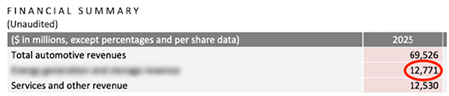
This new "super startup" has nothing to do with cars or robots or space or AI…
But it sits at the center of what Blackstone calls "a $23 trillion investment opportunity."
And on Oct 21st, Elon is expected to pull back the curtain and reveal exactly what he's building.
But Adam O'Dell already knows… and he reveals it all in this urgent video.
Alphabet Just Borrowed Another $25 Billion. The AI Debt Machine Has No Off Switch.
Alphabet (GOOGL) raised up to $25 billion in bonds today, its last expected dollar-denominated offering of 2026. The company has already raised over $50 billion in bonds globally this year. The spreads on existing Alphabet bonds widened as investors demanded more yield to hold them.
This is what AI infrastructure financing looks like from the debt side. Alphabet is spending $195-205 billion in capex this year. It funded $50B through bonds. Amazon issued bonds. Microsoft issued bonds. Oracle got downgraded to BBB-minus. The equity markets funded the story in the first half. The debt markets are funding the execution.
Wider spreads on Alphabet bonds mean the bond market is starting to price duration risk on AI spending — not default risk, but the concern that $50B in bonds locks you into a spending plan whose payoff is years away.
TQ Execution Bias
Watch credit spreads on tech investment-grade paper next week. If spreads widen further as Apple and others tap the bond market, the AI financing story shifts from equity to credit as the market to watch.
- Honeywell Aerospace (HON) fell 20% after cutting its 2026 organic sales growth outlook from 7-9% down to 4-5%. Supply chain issues, not labor costs. The same session where productivity data came in strong, a major industrial company revealed its constraint is components, not people. Both are true simultaneously.
- Apollo (APO) agreed to buy British airline easyJet for $7.7 billion, winning a bidding war over Castlelake. EasyJet controls valuable takeoff slots at Europe's busiest airports. Private equity is now buying airline infrastructure while jet fuel costs are still elevated. The bet is on normalization.
- Moderna (MRNA) received FDA approval for mFlusiva, the first mRNA flu vaccine, for adults 50 and older. Seven-month approval process, including a rare initial refusal. Now cleared. mRNA platform expanding beyond COVID is the long-term thesis. This is its first concrete step.
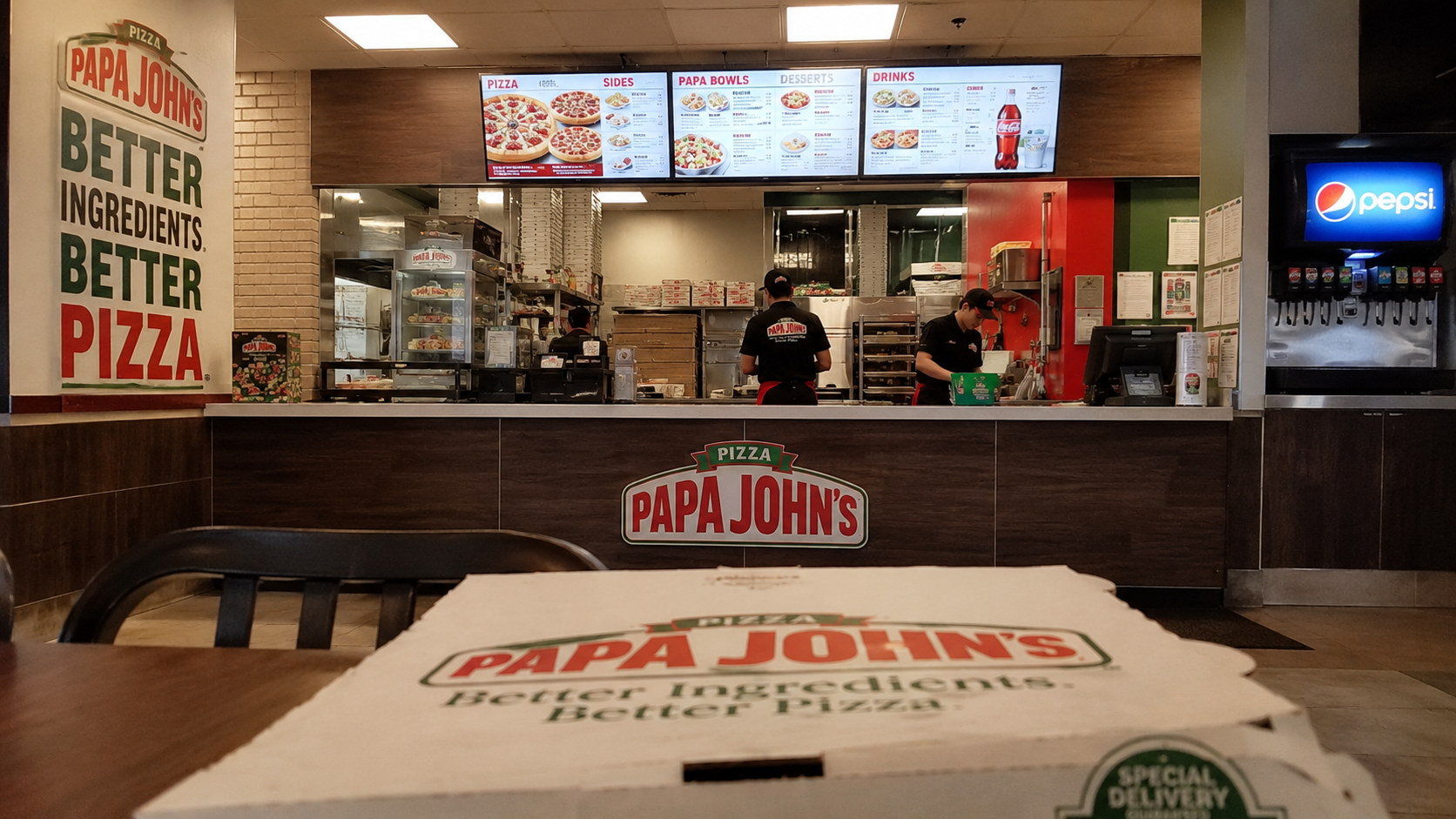
- Papa John's (PZZA) fell 17% after rejecting a sale following 18 months of review and suspending its dividend. Same-store sales down 8.3%. The company ran a full strategic review, decided to go it alone, and delivered the news alongside its worst quarterly numbers in years. Bold choice.
Navellier Warns: This Could Leapfrog Elon's SpaceX IPO
Elon Musk could take SpaceX public in 2026, at an estimated $1.75 trillion valuation. The IPO would include Elon's AI model, Grok. But according to Louis Navellier, a radical new AI model will launch this year… over 1,000 times more powerful than Elon's. And the company behind it could outperform SpaceX in the process.
Click here for full details (including Louis' new pick — free).
This ad is sent on behalf of InvestorPlace Media at 1125 N. Charles Street, Baltimore, Maryland 21201. If you're not interested in this opportunity, please click here.
SpaceX's lock-up flood became a non-event.
Iran published a Hormuz draft that bans US ships. Alphabet borrowed another $25 billion. Honeywell Aerospace cut its outlook 40%. Gold hit a seven-week high. The market barely moved.
Tomorrow's jobs report lands into one of the more complex setups of the year. Productivity beat big. Unit labor costs were tame. If payrolls print below 100,000, September hike is off the table and duration gets its real bid. If it prints above 150,000, the productivity argument holds but the rate debate reopens. Two months of directional uncertainty resolve tomorrow at 8:30am.