

TQ Evening Briefing
Chips had their best day in months. The 30-year yield hit a 19-year high. A hedge fund blew up. The war reached Egypt.
Same Session. Completely Different Markets.
Chips surged over 8%. Microsoft (MSFT) jumped 15% on Azure growth. The Nasdaq closed sharply higher. Good day, right?
Not quite. The 30-year Treasury yield hit its highest level since 2007. The Fed held rates yesterday, and the long end moved anyway. That's the market saying it doesn't trust the inflation story. Higher long rates make it more expensive to fund decade-long data center leases. That's a slow tax on everything being built right now.
GDP came in at 1.5% for Q2. Estimates were 1.8%. Growth is slowing while inflation stays sticky. That's a tough spot to be in, and the bond market is pricing exactly that.
TQ Edge Setup
The chip bounce is real but the long end is the bigger signal. Growth slowing plus sticky inflation is the worst environment for long-duration spending. Watch the 30-year.
There's a Strategy Behind the Iran War.
I know because I've seen the evidence firsthand.
On March 2nd — three days after the first missiles hit — I sat across from two U.S. Congressmen in back-to-back private meetings.
Those meetings pointed me toward something I spent weeks verifying.
The real purpose behind the strikes. The real objective. And the single company at the dead center of all of it.
This isn't random. It's a calculated Two-Front Economic War.
And there's one company positioned right at the heart of it.
See the strategy behind the Iran war — and the company at the center of it
The sooner you understand what's really happening — the better positioned you'll be before August 12th.
— Dylan Jovine, Founder, Behind the Markets
Microsoft Won. Meta Lost. The Market Drew a Clear Line Between Them.
Microsoft (MSFT) reported Azure growing 43%. Revenue crossed $90 billion. The stock jumped 15%. The market read it as proof that AI spending can convert into real revenue.
Meta (META) told a different story. Free cash flow fell 91% in Q2. It missed earnings estimates. Revenue guidance for next quarter came in light. The stock fell 9%. Meta is spending more than ever and showing almost nothing for it yet. Reality Labs alone lost $4.6 billion in Q2. That is the specific line item draining the cash. AI capex adds to it, but the metaverse buildout is still eating billions per quarter with no revenue attached.
The market drew a line. Companies where AI spend produces revenue get rewarded. Companies where it eats cash flow get sold. That's the new framework. It's not about who spends more. It's about what the spending produces.
There's a wrinkle in Microsoft's numbers worth knowing. It changed how it counts data center leases, moving some from finance to operating leases. That made reported capex look smaller. Actual building plans didn't change. The footnotes matter here.
TQ Edge Setup
The Microsoft vs Meta split is the clearest AI earnings signal of the quarter. Own the revenue side. Be cautious on the spending side.
A $45 Billion Hedge Fund Blew Up. Citadel Bought the Pieces.
Situational Awareness, an AI-focused hedge fund that peaked at $45 billion, was forced to sell its entire public stock portfolio. Citadel bought the bulk of it.
The fund was long AI hardware like SK Hynix and short software names like Adobe (ADBE). When hardware sold off and software bounced, both sides of the trade moved against them simultaneously. That's how a fund collapses fast.
The forced selling from this fund has been a real weight on chip stocks for weeks. Micron (MU) was down 25% in a month. Intel (INTC) had lost 33%. AMD (AMD) was 14.5% lower. Today all three surged double digits. That's what happens when the forced seller is finally done.
Jim Cramer called it a "clearing event." He's right on the mechanics. When leverage unwinds, the stocks it was crushing tend to bounce hard once the selling stops. That's not a fundamental improvement. It's a technical one.
TQ Edge Setup
The Situational Awareness unwind is done. The chip dislocation it created is clearing. That's a technical setup, not a fundamental one. Know the difference.
He Put Half His $9 Billion Into One Unusual AI Stock
One billionaire put over half his $9 billion fund into one unusual AI stock — then bought more shares nearly every day for 61 straight trading days.
It's not Nvidia... a chipmaker... or a cloud giant.
Instead, it owns the assets the entire AI boom depends on...
And Trump signed emergency executive orders to protect them.
Right now it's trading at a rare discount...
The same kind that's previously turned $10,000 into $55,000. In just over 12 months
>>>Whitney Tilson reveals the name, completely free<<<
This ad is sent on behalf of Stansberry Research, 1125 N Charles St, Baltimore, MD 21201. If you would like to optout from receiving offers from Stansberry Research please click here.
A Drone Hit Ships in Egypt. The Conflict Just Got a New Address.
A drone struck two ships at Egypt's Damietta port on the Mediterranean. A regasification ship and a storage vessel caught fire. Nobody claimed responsibility.
This matters because Damietta is far from the Strait of Hormuz. The conflict has been gradually widening. First the Strait. Then the Red Sea. Now a Mediterranean port in Egypt. Each step expands the geography of the risk.
Energy infrastructure attacks don't have to be successful to move markets. They create insurance costs, rerouting decisions, and supply uncertainty. Shell (SHEL) reported its best quarter since 2022 partly because of exactly this environment. High oil prices and supply disruption are a profit machine for energy majors, even as they're a headache for everyone else.
The yen also surged over 2% in a single session, its biggest move since December 2022. Japan is suspected to have intervened. When the yen moves that fast, global carry trades unwind quickly and risk positioning shifts across every asset class.
TQ Edge Setup
The war's geographic spread is underpriced. Each new location adds a new risk premium. Energy infrastructure anywhere near the conflict zone is now in play.
- ICE (ICE) agreed to buy MarketAxess (MKTX) for $5.7 billion at a 33% premium. The owner of the NYSE is buying into electronic bond trading. Fixed income is going digital faster than most expected. This is a structural shift, not a cyclical one.
- GDP at 1.5% and core PCE at 3.3% landed in the same session. Slower growth, sticky inflation. The Fed held rates with both of those numbers on the table. Warsh is waiting. The bond market is not waiting with him.
- Norwegian Cruise Line (NCLH) fell over 7% after cutting guidance. The CEO said the problems are "self-inflicted," not macro. That's unusual candor. It also means the geopolitical excuse doesn't apply here. When management blames itself, the turnaround timeline gets longer.
- Rolls-Royce hiked full-year guidance after data center power orders grew over 50% in H1. The defense-to-data-center pivot is producing real results. Physical AI infrastructure demand is showing up in the most unexpected places.
Hidden in Tesla's Filing: A $12 Billion "Super Startup"
Pull up Tesla's most recent SEC filing. Page 5.
And you'll see a single line showing $12 billion in revenue from a brand-new "super startup" Elon Musk has been quietly incubating inside Tesla.
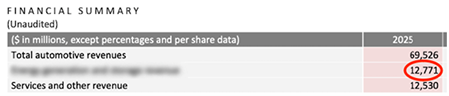
This new "super startup" has nothing to do with cars or robots or space or AI…
But it sits at the center of what Blackstone calls "a $23 trillion investment opportunity."
And on Oct 21st, Elon is expected to pull back the curtain and reveal exactly what he's building.
But Adam O'Dell already knows… and he reveals it all in this urgent video.
Chips bounced. Bonds warned. The war found a new port.
The session looked like a recovery on the surface. Chips surged. Microsoft soared. The Nasdaq closed well up. But the 30-year yield at 19-year highs is the signal sitting underneath all of it. Growth is slowing. Inflation is stuck. The Fed is waiting. The bond market is charging a premium for that uncertainty.
Amazon (AMZN) and Apple (AAPL) reported after the bell. Those results set the tone for tomorrow. The Microsoft vs Meta framework is now the lens. Revenue from AI spend or cash flow destruction. One or the other. No middle ground.