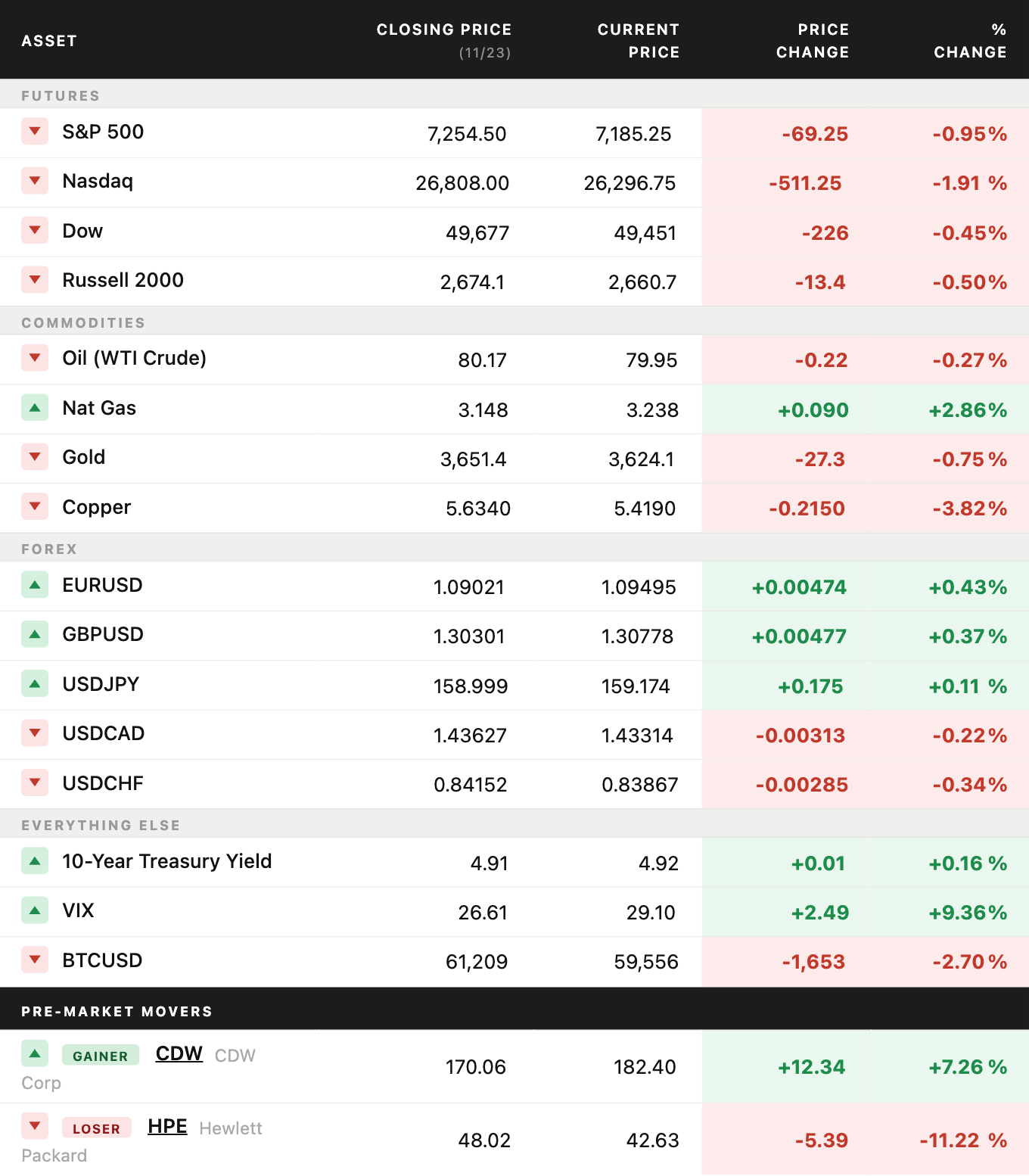
One Company's News Carried Monday's RallyThe S&P 500 rose 4.7% on Monday and the Nasdaq Composite 6.5%, the best day for both since April 2025. Nvidia (NVDA) jumped 31.5% to $165.05 after its board reinstated Jensen Huang as chief executive. Credit did not join in. High-yield bonds barely moved, with the main high-yield bond ETF up 0.25%. The VIX fell 26% to 26.62. Nvidia was down about 5% before Tuesday's open. Market Implication Monday repriced the risk around Nvidia's leadership, not the outlook for the economy or for borrowers. Credit prices default risk, and it barely rallied. That leaves stocks leaning on Nvidia to hold the gain. If high-yield bonds stay flat while Nvidia gives back more, Monday was a relief trade and little else. The next 12 months could make or break your retirement. That's the warning from Dr. Mark Skousen, the economist who called Black Monday, the '95 tech boom and the 2009 bottom. And it has nothing to do with the crash everyone keeps predicting. He says something far stranger is underway... and most people will miss it completely. See his warning free, right here... while there's still time to act. WHAT ACTUALLY MOVED MARKETS HPE Grew 50%. It Guided Margins Lower.Hewlett Packard Enterprise (HPE) reported fiscal fourth-quarter revenue of $14.5 billion, up 50%. Server sales nearly doubled to $8.8 billion. Adjusted earnings of $1.43 a share topped estimates, and it raised its fiscal 2027 sales outlook. The stock traded about 12% lower before the bell, after a 17% gain on Monday. The weak line was margin. Finance chief Marie Myers said HPE passed higher component costs on to buyers this year. She expects those price increases to slow in fiscal 2027 as more sales come from AI systems, which earn thinner margins. She guided the cloud and AI unit's operating margin to about 14% for fiscal 2027. It was 18.4% in the fourth quarter. Server makers point to memory costs. HPE and Dell (DELL) are among those asking buyers to pay more on signed orders. Some increases reach 45%, a Financial Times report said. Dell reports after the close. Structural Setup HPE's margin gains this year came from raising prices as part costs climbed. Its outlook assumes that cushion shrinks as thinner-margin AI systems grow. Now the server trade tests pricing power. If Dell's margin also falls, the AI rebound bought revenue without the profit. Asian Chips Got the Buyers. Bitcoin Funds Got the Exits.Taiwan's Taiex jumped 9.0% on Tuesday as Asian chipmakers caught up with Nvidia's rally. Bitcoin gave back Monday's bounce and dipped below $60,000 overnight. U.S. spot bitcoin ETFs lost a net $569.7 million on Monday, their fifth straight day of outflows, SoSoValue data show. The largest fund lost $509.3 million on a day its shares rose about 5%. November outflows have reached $4.71 billion, above June's monthly record of $4.51 billion. Strategy (MSTR), the steadiest corporate buyer, spent about seven times as much on its own preferred stock as on bitcoin last week. Polymarket's contract on a bitcoin dip to $55,000 by year-end traded near 58 cents early Tuesday, up from 46 cents Monday. Sector Read Chipmakers have a direct line from Nvidia's news to their own sales. Bitcoin has none, and its holders used the bounce to sell. Monday's bitcoin rally was a price move without new money behind it. If outflows continue while chip stocks hold their gains, bitcoin is trading on its own sellers, not on the AI cycle. No. 1 Gold Play for 2027
New research proves why gold could come roaring back in 2027. Even J.P. Morgan is targeting $6,300. We think it has the potential to soar even higher. And the best way to play it right now isn't bullion, an ETF, or a miner. It's a virtually unknown gold strategy that averaged 38% a year for 18 straight years. And you can get started for under $40. See it now. This ad is sent on behalf of Stansberry Research, 1125 N Charles St, Baltimore, MD 21201. If you would like to optout from receiving offers from Stansberry Research please click here. Williams Said Tariffs Faded. Energy and AI Did Not.New York Fed President John Williams said Monday that inflation, about 3.5%, is "simply too high." He does not expect it to reach the Fed's 2% goal until 2028. He identified three shocks. Tariff effects have "largely abated," he said. Energy prices remain high, he said, with refining tight and the outlook unclear. Brent settled at $89.37, its lowest close since late August and 23% below its October peak. The third shock is AI, where prices for chips have "increased sharply." He called AI risks two-sided and said supply-side risks, including the Middle East, are skewed higher. He told reporters he would not rule out hikes at consecutive meetings. Fed funds futures fully price a December hike, CME's FedWatch tool shows. Watch Signal Williams sees more upside risk in energy and supply chains than in AI. So the case for more hikes still rests on refiners and the Middle East as much as on chips. Cheaper crude alone will not end the hiking cycle. If oil keeps sliding and chip prices keep rising, AI becomes the main argument for back-to-back hikes. Takeover Premiums Look Bigger Than They AreSanofi agreed to buy Insmed (INSM) for $175 a share in cash, about $41 billion. The headline premium is 46%, measured from Insmed's close before reports of Sanofi's interest. Against Monday's close, it is about 17%. The price is also about 18% below Insmed's 52-week high of $212.75. Ashland (ASH) shows the same gap in a deal backed by private equity. Clariant confirmed talks to buy the company together with buyout firm Clayton, Dubilier & Rice. A report said the cash price would be close to Friday's $72.40 close, below where Ashland traded in early November. Ashland fell 3.8% on Monday while the broad market surged. The Read Headline premiums can overstate what sellers get. Insmed's bid is generous against its pre-report price but sits well below last year's high. If a rival bid lifts Ashland back above its early-November range, sellers still have leverage. If none comes, buyers with cash lock in entry prices before any recovery. 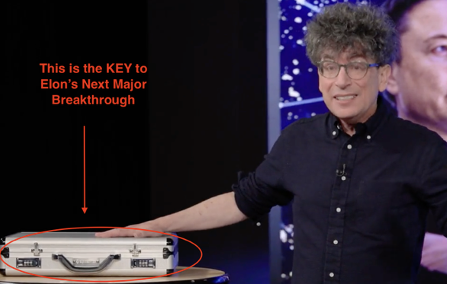
Renowned tech investor James Altucher – the man who called the rise of Nvidia, Apple and SpaceX years in advance – just uncovered Elon Musk’s latest breakthrough idea…And according to James, it’s going to be even bigger than the SpaceX IPO – creating up to 1.8 million new millionaires over the coming years. The pieces behind it are inside this briefcase – which he reveals 100% FREE in this video. Click here now for all the details. Economic Data: Conference Board consumer confidence and home prices today, plus a $70 billion 5-year note sale. October PCE prices, third-quarter GDP, durable goods, jobless claims and the Beige Book Wednesday. Markets close Thursday and close early Friday. Fed Speakers: None scheduled. The pre-meeting quiet period starts Saturday. Earnings: Dell and HP Inc. (HPQ) after the close. Overnight (closes): Kospi +6.3% | Nikkei +3.9% | Shanghai +0.3% | Hang Seng -0.7% | ASX 200 +1.6% Monday's rally bought back the AI trade in one session. By Tuesday, HPE had signaled thinner margins ahead, Williams listed AI among the forces keeping inflation high, and bitcoin funds kept selling into the bounce. Dell reports tonight. If its margin holds while it passes higher memory costs to buyers, the rebound has earnings behind it. If its margin slips too, Monday priced the sales and missed the cost. AI Moves Into the Biotech LabFor most of the AI boom, the money followed the hardware. Chips. Data centers. Cloud.
Now the algorithms are walking into the lab.
In September, a drug whose target was found by AI, and whose molecule was designed by AI, dosed its first patient in a Phase III trial. A second AI-engineered medicine is in Phase III too.
We profiled the 5 companies leading the shift in a new FREE Special Report: AI Moves Into the Biotech Lab.
We'll text it straight to your phone. Get the Free Report by Text → |
|