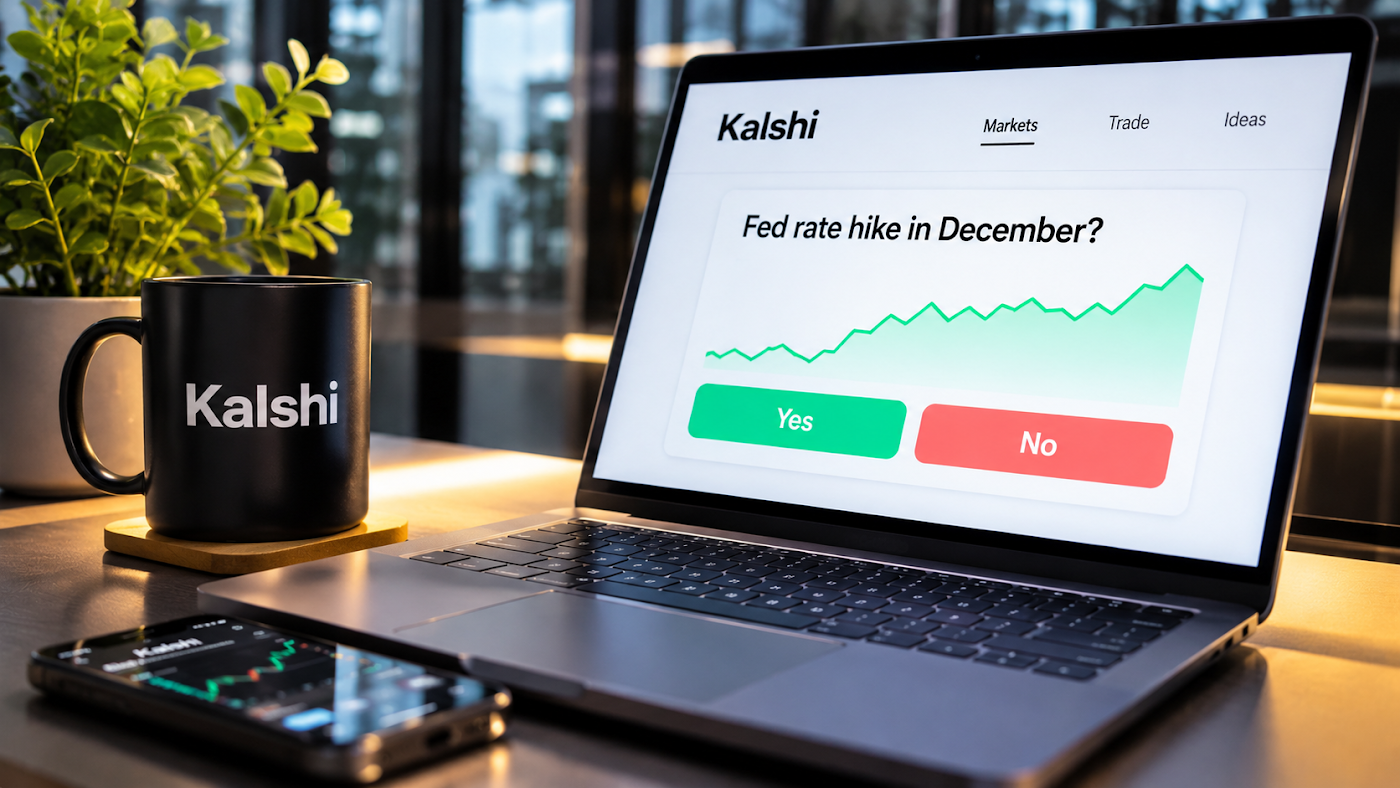
The Print Met the Line. The Front End Paid.Consumer prices rose 0.4% in October and core prices 0.3%, each a tenth above forecasts. That made three straight 0.3% core readings. The report was the last on consumer prices before the Fed meets, and it carried no annual rate because October 2025 prices were never collected. Hours earlier, Fed Governor Christopher Waller had pointed to that exact reading. If core ran "around 0.3 percent or even higher," he said, a half-point December hike "should be considered." Dallas Fed President Lorie Logan wants at least two more quarter-point increases. The cost of money reset fastest at the front end. The two-year yield rose 17 basis points to 4.73%, and the 10-year rose 10 to 4.98%. The Treasury sold $42 billion of new 10-year notes at 5.02%, and bids covered the sale 2.46 times, down from 2.77 in October. Monday's letter asked whether the report could pull the 10-year below 4.80% into that sale. Yields went the other way. The Treasury sells $25 billion of 30-year bonds Thursday, and producer prices follow Friday. Stocks took it better than bonds. The S&P 500 fell as much as 1.1% and closed down 0.4%, the Nasdaq lost 0.7%, and the VIX ended lower after topping 21. TQ Trade Implication Bonds and stocks read the same print differently. The two-year prices the next few Fed meetings, so a bigger hike lands there in full, while stocks feel it through growth and valuations. A falling VIX beside a 17-basis-point jump in the two-year says equity traders see a costlier Fed and little damage to growth. The Quarter-Point Bet Slipped on the Print. Traders Priced a Bigger Hike.Kalshi's contract on a quarter-point December hike touched 91 cents within seconds of the report, then traded at 80 cents less than a minute later. It was near 86 cents by early afternoon, below about 88 before the report but above Monday's 81. It pays only on a 25-basis-point move, so under Kalshi's rules a half-point hike resolves it No. The drop came as traders added odds of a bigger move. The FedWatch tool from CME told the same story. It priced no chance of a December hold and put a half-point move near 12% by late morning, up from about 1% before the report. TQ Edge Setup A hike contract that falls on hot data looks dovish, and Tuesday it was the opposite. When outcomes are split by size, rising odds of a bigger move drain the smaller bucket even as total hike odds climb. That makes the quarter-point contract a weak gauge of hawkishness from here. The dip was the hawkish signal. CoreWeave Beat. Interest Cost Four Times Its GAAP Operating Profit.CoreWeave (CRWV) reported after the close on the day the 10-year neared 5%. Revenue of $3.66 billion beat its own range, and adjusted operating income of $379 million topped guidance of $200 million to $260 million. Backlog reached about $132.5 billion, up from about $104 billion at the end of June. The full-year revenue outlook rose. Net interest expense was $846 million, about four times GAAP operating income of $207 million. CoreWeave expects $1.05 billion to $1.15 billion of interest next quarter. The shares rose as much as 7% after hours, then pared the gain. TQ Edge Setup CoreWeave answered the demand question and sharpened the funding one. Backlog turns into revenue only after capacity is built, and the interest on that build comes due first. Each quarter of growth now arrives with a larger interest bill, which ties the stock more closely to rates. 
A small Colorado company now owns rights to a tech that could save the entire public power grid from collapse. And billionaire Sam Altman is now an investor. Click here to learn this company's name for free. This ad is sent on behalf of Altimetry, 110 Cambridge Street, Cambridge, MA 02141. If you would like to optout from receiving offers from Altimetry please click here. MARA Sold 40% of Its Bitcoin. The Stock Rose 10.5%.Bitcoin touched its lowest level since late August, about $72,750. Strategy (MSTR), which is still buying, fell 3.6%. Coinbase (COIN) fell 2.9% after touching a 52-week low. MARA Holdings (MARA) rose 10.5%. After the third quarter ended, it sold 13,597 bitcoin at an average of about $81,039, raising about $1.1 billion. That was about 40% of its end-of-September holdings and roughly six times what it mined in the quarter. It used $750 million to repay all of its bitcoin-backed loans. Less than 5% of its remaining coins are now pledged or lent, down from 57%. Its board authorized up to $500 million of buybacks. MARA said it will keep using bitcoin to raise cash for AI infrastructure. Some of its noteholders can demand repayment next year. TQ Execution Bias Tuesday treated a bitcoin treasury as a liability as much as an asset. A miner that sold near $81,000 and repaid its coin-backed loans no longer has debt secured by a falling coin, and it has cash for buybacks. A buyer still adding coins absorbs every leg lower. The tilt favors crypto balance sheets that are shrinking exposure over those still adding to it. - The buyers stopped at $52. GFL Environmental (GFL) ended its review and will stay public. Blackstone (BX), KKR (KKR) and Energy Capital Partners offered $52 a share, and the board wanted $58 or more, a report said. GFL has not confirmed a price. Its shares fell 7.6% to $42.41, about 18% below the reported bid.
- A miss got bought. Take-Two (TTWO) rose 8.3%, a day after missing its own bookings range. Chief Executive Strauss Zelnick said Grand Theft Auto VI preorders are "tracking far in excess" of expectations, yet he kept the bookings outlook unchanged before the Nov. 19 launch.
- Growth got sold. Hims & Hers (HIMS) fell 16.6%, on top of an 11.8% drop Monday before its report. Revenue grew 49%, mostly from overseas; U.S. revenue rose 21%. Subscribers fell from the prior quarter, and the full-year revenue range missed forecasts.
The Debate Moved to Size. Bonds Moved First.Tuesday's main signals ran through the cost of money: the two-year, the 10-year sale, CoreWeave's interest guide and a miner paying off coin-backed debt. Thursday's 30-year sale tests whether long-dated money gets more expensive too. If it also draws weaker demand, the selloff is no longer only about the Fed. Borrowers that fund long-lived assets, such as CoreWeave, would then face both a higher policy rate and a higher long-term rate. Big Pharma Stopped Watching AI Drug Discovery. It Started Paying.Sanofi has paid one AI biotech $144 million in upfront and milestone payments. Eli Lilly invested $40 million in another. Bristol Myers Squibb is putting a third company's AI co-scientist to work inside its own research organization.
The industry's biggest drugmakers used to watch this technology from the sidelines. Now they're customers.
We profiled the 5 companies leading AI drug development in a new FREE Special Report: AI Moves Into the Biotech Lab.
We'll text it straight to your phone. Get the Free Report by Text → |
|