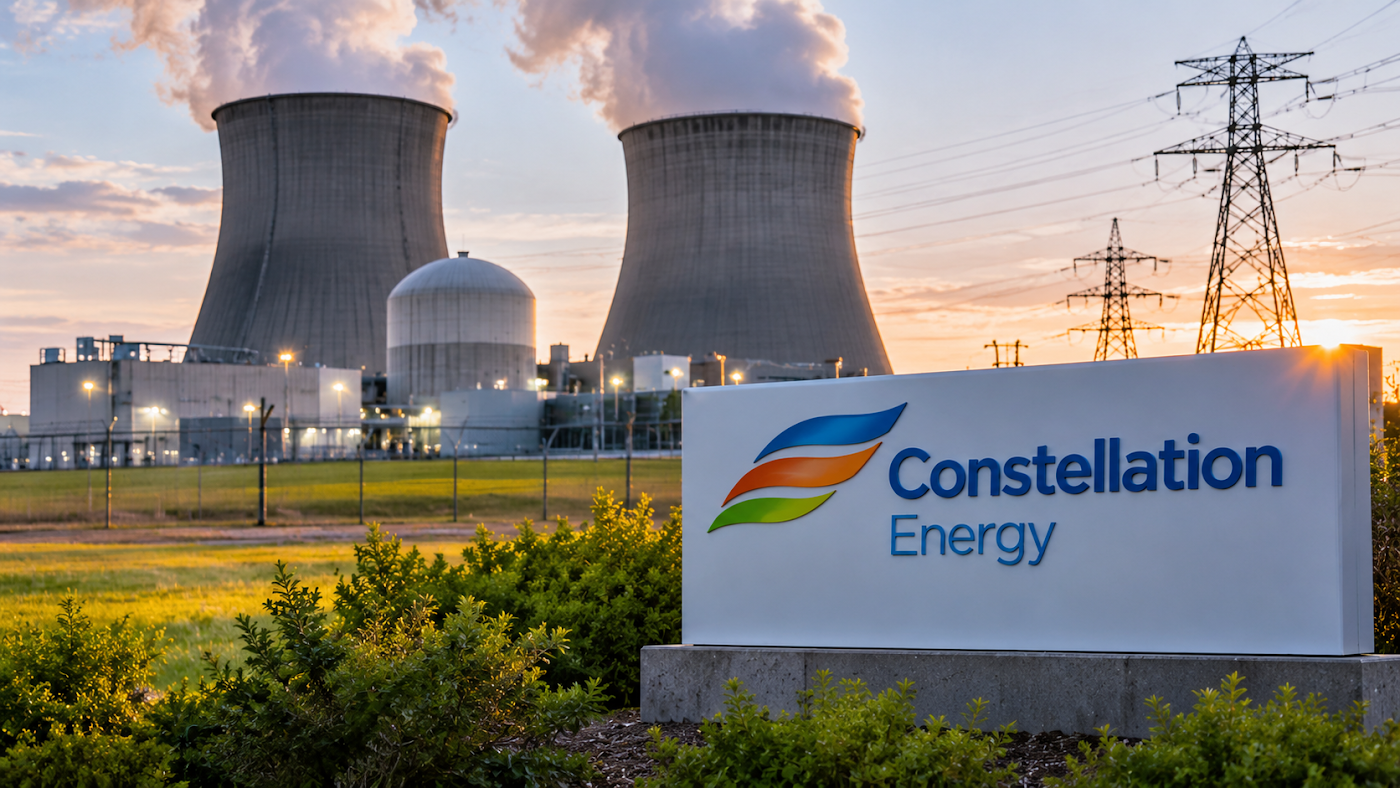
Oil Fell More Than 5%. The Two-Year Yield Rose.The S&P 500 rose 2.4% and the Nasdaq 2.7%. Brent fell more than 5% to below $93, a two-month low. Yields did not follow oil. The 10-year rose 2 basis points to 4.88%. The two-year rose 5 basis points to 4.56%. For most of the Iran war, oil and yields have moved together. Last Wednesday, Brent fell almost 9% and the two-year fell 3 basis points. CME Group's (CME) FedWatch tool priced a December hike around 80%. Chicago Fed President Austan Goolsbee cited a "cost side and inflation side failure in the mandate." Richmond's Tom Barkin said firms are trying to pass on costs they had absorbed. October consumer prices arrive Tuesday, and producer prices Friday. TQ Trade Implication Cheaper oil used to mean lower yields, and Monday it did not. Both Fed presidents pointed to costs, which is a producer-price question more than an energy one. That moves the weight of the hike bet from crude to Friday's report. If Friday's producer prices show the cost pressure both described, the hike bet survives even a soft CPI. Power Sold Off After the Election. Two Producers Guided Through It.Constellation Energy (CEG) rose 10.5%. NRG Energy (NRG) rose 10.3%. Both now sit above their Election Day closes. They fell 9% and 16% in the two sessions after the vote. Friday they gained 4% and 10%. Investors were weighing state limits on new data centers. Constellation earned an adjusted $5.06 a share. Analysts expected about $3.90. It lifted its 2026 outlook midpoint to $12.65 from $12. Its PJM West reference price averaged about $70 a megawatt-hour. A year earlier, it was $47. NRG earned an adjusted $4.68 a share. Its first 2027 outlook is $8.05 to $10.05 a share. It also agreed to sell six gas plants, 4.9 gigawatts in all, for $4 billion. It keeps its whole PJM fleet and sells at eight times the plants' expected 2027 EBITDA. The cash goes to buybacks and debt. Vistra (VST) rose 7.3% and remains about 4% below its Election Day close. It lost about 19% in two sessions last week. It rose 10.6% Friday after guiding 2027. About 98% of next year's output is already hedged. TQ Execution Bias Last week's selling treated every power producer as one bet on new data centers. Monday's reports showed earnings from output already sold into higher prices. A pause on new connections does not touch that business. The tilt favors producers with hedged next-year output over those that need new load. If a state limit reaches existing load, that line stops protecting anyone. Chips Rose 6.9%. Nvidia Fell 4.3%.The Philadelphia semiconductor index rose 6.9%. Nvidia (NVDA) fell 4.3% to $178.67. This morning's Close set the test after Sunday's board probe. An index up and Nvidia down meant the market kept a governance discount on one name. The gap was 11 points. AMD (AMD) jumped 13.3%. It said its EPYC chips host Alphabet's (GOOGL) new Google Cloud TPU 8tx systems. A Polymarket contract on CEO Jensen Huang's resignation or removal by year-end traded near 15 cents. House committee chairs want his answer by Wednesday on a requested Nov. 18 briefing. Nvidia reports Nov. 17. TQ Edge Setup Money stayed in chips and moved away from one name. An exit contract near 15 cents says traders are pricing scrutiny, not a change at the top. That puts the discount on Nvidia's calendar rather than on chip demand, and no peer shares that calendar. If Huang turns down the briefing on Wednesday, the confrontation arrives six days before results. Crypto Got New Rails. Bitcoin Sat Still.The New York Stock Exchange picked Avalanche as the ledger for its planned tokenized-stock venue's clearing firm. The venue still needs approval. Schwab (SCHW) added solana, avalanche and chainlink for retail clients. Coinbase (COIN) won final OCC approval to run a national trust company for custody. PNC (PNC) began a USDC payments pilot with Coinbase. Avalanche's token rose about 8%. Bitcoin was roughly flat near $74,800. Strategy (MSTR) fell 2.6%. It bought 1,036 bitcoin last week for $81.9 million. It spent $188.3 million buying back its STRC preferred. It paid for both by selling common stock. The week before, it bought 811 bitcoin and spent $208.2 million on its preferred. The week before that, it bought none and spent about $205 million. MSCI (MSCI) announces its November index review Wednesday evening. Its earlier test run under a new rule on non-operating companies flagged Strategy. TQ Edge Setup Monday's crypto news widened access, and access did not move the price. For a third straight week, Strategy spent more on its own preferred than on bitcoin. That thins the corporate bid while the new rails have yet to bring new buyers. If Wednesday's review drops Strategy, index funds would have to sell the stock it uses to pay for both. - Take-Two missed its own range before GTA VI. Take-Two (TTWO) said net bookings fell 18% to $1.60 billion. Its own forecast was $1.62 billion to $1.67 billion. It kept its full-year bookings outlook. Grand Theft Auto VI is due Nov. 19. The stock fell 3.5%, then swung both ways after hours.
- KKR set a record and lagged the market. KKR (KKR) earned a record adjusted $1.78 a share. Analysts expected about $1.58. It expects to return more than $40 billion to clients this year. The stock rose 1.7%, trailing the S&P 500.
- Surgery Partners (SGRY) closed near its deal's ceiling. A Bon Secours Mercy Health affiliate raised its cash bid to $25 from $23.50. An unnamed party had proposed a non-binding $28. If closing slips to October 2027, a ticking fee pays up to $26.61. The stock closed at $26.45, 99% of that cap.
Oil Got Cheaper. Money Didn't.Monday paid for what was already in hand. Power producers with new outlooks rose, and so did chips outside Nvidia. A cash deal traded near its ceiling. Nvidia and Strategy, each facing a dated test, fell. Oil fell more than 5%, and the front end gave nothing back. Tuesday's inflation report has to do what oil could not. If it pulls the 10-year below 4.80% into the $42 billion sale, the rally gains rate support. If yields hold near 4.88% after a soft print, the hawks are setting the price of money, not the data. Big Pharma Stopped Watching AI Drug Discovery. It Started Paying.Sanofi has paid one AI biotech $144 million in upfront and milestone payments. Eli Lilly invested $40 million in another. Bristol Myers Squibb is putting a third company's AI co-scientist to work inside its own research organization.
The industry's biggest drugmakers used to watch this technology from the sidelines. Now they're customers.
We profiled the 5 companies leading AI drug development in a new FREE Special Report: AI Moves Into the Biotech Lab.
We'll text it straight to your phone. Get the Free Report by Text → |
|


