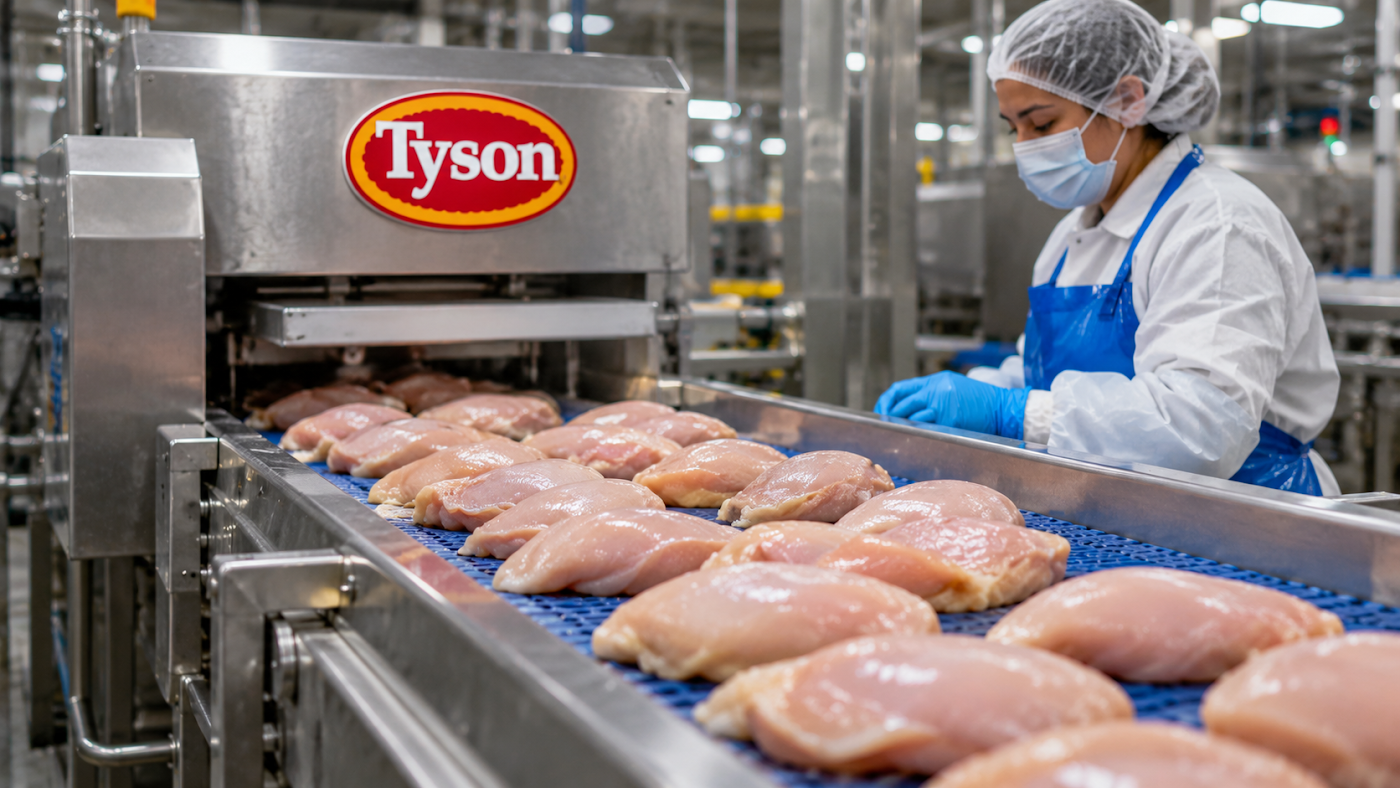
Warsh Sketched an AI Bust. Stocks Were Already Selling.Fed Chair Kevin Warsh opened the Fed's productivity and jobs conference with three staff scenarios for AI. In one, the technology disappoints. "Expected returns could turn down and equity valuations could fall," he said, leading to a slowdown and higher unemployment. He called the scenarios illustrative. Stocks were already lower before he spoke, and they kept falling. The S&P 500 closed down 1.9%, the Nasdaq 2.5% and the Dow 1.4%. The Philadelphia chip index fell 5.3%, and the VIX jumped above 22. Treasuries rallied. The 10-year yield slipped about 3 basis points to 5.12%. Futures still price a quarter-point hike in December. The New York Fed's factory index fell to 7.8 from 25.5, less than half what economists expected. Hiring grew at the fastest pace in more than four years, and price gains slowed but stayed high. TQ Trade Implication Stocks sold the AI trade while bonds rallied, so the selling read as a growth scare. That matters for a Fed still priced to hike in December. Falling long yields cushion the very stock losses Warsh described. If yields climb while chips keep falling, that cushion is gone and the selling has no hedge. Washington's Chip Rule Asks Who the Customer IsThe Commerce Department released a rule written at the direction of the Treasury and the National Security Council. It covers advanced AI chips bound for any data center, anywhere, that serves companies tied to China, Macau or other restricted countries at scale. Once it takes effect, those shipments will need a license. The rule would also add a license requirement for Indonesia, Malaysia, Singapore, Thailand and Brazil. Buyers headquartered in the U.S. would be exempt, with monthly reporting. Everyone else would face case-by-case review. The rule takes effect once it is published in the Federal Register, and that date is still blank. Chip stocks slid the same day. Nvidia (NVDA) fell 4.1%, a little less than the chip index. Server maker Dell (DELL) fell about 7%. Commerce did not say how much revenue is at risk, and Nvidia reports Tuesday after the close. TQ Edge Setup The rule would move export control from the shipping dock to the data center, and it would sort buyers by headquarters. In the five named countries, U.S.-headquartered buyers would keep getting chips with paperwork while everyone else would wait on case-by-case reviews. Nvidia fell no more than its peers, so the market has not yet charged it a separate penalty. If server makers like Dell keep trailing Nvidia after Tuesday's report, investors are pricing the license delay on the builders. Tyson Guided to Smaller Sales. The Stock Jumped.Tyson Foods (TSN) earned an adjusted 61 cents a share in its fiscal fourth quarter, down 47% from a year earlier. That topped most analyst forecasts. The outlook was smaller. Tyson expects fiscal 2027 sales to fall 3.5% to 5.5%. It pointed mainly to lower beef volumes from plant restructuring and tight cattle supplies. Analysts had expected sales to hold up better. Beef lost $654 million in fiscal 2026 on an adjusted basis. Tyson's fiscal 2027 beef outlook runs from a $300 million loss to a $100 million profit. It also raised its quarterly dividend to 52 cents, and free cash flow rose $486 million for the year. Tyson expects chicken profit to fall next year. The shares rose almost 9% as the broad market fell. TQ Execution Bias Investors bid up a smaller Tyson that expects to lose less on beef. Shrinking beef volume trims the segment where the losses sit, so profit can hold up even as sales fall. The tape rewarded margin repair over sales growth. If tight cattle supplies push beef toward the $300 million loss end of its range, much of the case for the jump fades. Strategy's New Stock Paid for Its PreferredStrategy (MSTR) bought 485 bitcoin last week for $33.4 million, its Monday filing showed. It spent $228.1 million buying back its STRC preferred stock, nearly seven times as much. Common shareholders paid for most of it. Strategy sold common stock and put $206.3 million of the proceeds into the buybacks. Buybacks have outrun bitcoin purchases every week since late October. The new coins cost $68,887 each, above bitcoin's price near $65,000 late Monday. Strategy's 850,849 bitcoin cost an average of $75,452, so the stack sits more than 13% below cost. Its shares fell nearly 8%, more than the 5.5% drop in the largest bitcoin fund. TQ Edge Setup Strategy now spends most of its new equity on its own preferred. The buybacks support the security it uses to raise money, and common holders fund them through dilution. That leaves bitcoin with a smaller bid from Strategy. If next Monday's filing shows a fifth straight week of buybacks outrunning bitcoin, the coin's steadiest corporate buyer has turned its money toward its own paper. - Most of a private equity exit came in stock. Diamondback (FANG) agreed to buy Midland Basin assets from EnCap-backed Double Eagle. It will pay $2.15 billion in cash and about 15.56 million shares. Its shares fell about 4% as crude slid. At Monday's close the stock portion is worth more than the cash, so the sellers' payout now moves with Diamondback's shares.
- Oil looked past the war headlines. Brent fell more than 3.5% to about $92.30. Britain's maritime agency had reported a tanker hit by a projectile leaving Hormuz. Iran's foreign minister said a regional bloc backed Tehran's two-day plan to reopen the strait, on conditions including an end to the U.S. blockade. Polymarket's Nov. 30 ceasefire contract traded near 71 cents, and oil has been pricing a surplus through the attacks.
Bonds Cushioned the Slide Warsh laid out a path where the AI payoff fails and valuations fall. Monday's tape looked like it, though stocks were falling before he spoke. Chips sold off and the 10-year slipped to 5.12% instead of rising. Washington's chip rule will add a policy cost once it takes effect, and no company has sized it. If chips fall again after Nvidia reports and the 10-year rises with them, stocks lose the bond hedge they had on Monday. AI Moves Into the Biotech LabFor most of the AI boom, the money followed the hardware. Chips. Data centers. Cloud.
Now the algorithms are walking into the lab.
In September, a drug whose target was found by AI, and whose molecule was designed by AI, dosed its first patient in a Phase III trial. A second AI-engineered medicine is in Phase III too.
We profiled the 5 companies leading the shift in a new FREE Special Report: AI Moves Into the Biotech Lab.
We'll text it straight to your phone. Get the Free Report by Text → |
|