


TQ Evening Briefing
The 10-year Treasury briefly topped 5% as AI fears split tech between chips and cybersecurity. Bank of America warned Q3 investment banking fees could fall more than 10%.
Stocks Fell, But the Bigger Move Was Inside Tech
The S&P 500 fell 0.5%. The Dow lost 0.3%. The Nasdaq dropped 0.6%. The Nasdaq was down more than 1% at its session low before recovering much of the decline.
The session split tech into two very different trades. AI infrastructure and semiconductor names sold off hard as leading AI executives called for a slower pace of development. Cybersecurity stocks surged as the same AI safety concerns pointed toward greater demand for protection.
The indexes finished lower. The rotation underneath them was much more aggressive.
TQ Trade Implication
The AI trade is no longer moving as one block. Wednesday’s Fed decision and Kevin Warsh’s guidance will hit the rate-sensitive side of the trade at the same time the market is deciding how seriously to take the AI slowdown debate.
7 Income Machines Built to Make You Rich
The 7 Stocks to Buy and Hold Forever aren’t just plays for the next quarter - they’re built to deliver for decades.
These are blue-chip companies with fortress balance sheets, elite dividend track records, and the staying power to outperform in bull and bear markets alike.
Some are Dividend Kings, others are on the path there, and all are proven wealth compounding machines.
Download the full list now - before it disappears behind the paywall.
The AI Slowdown Debate Split Tech Into Two Very Different Trades
Anthropic CEO Dario Amodei called for a slower pace of frontier AI development over the weekend, arguing that the technology is advancing faster than the industry’s ability to manage its risks. OpenAI CEO Sam Altman and Elon Musk backed the idea of pacing development, while President Trump pushed back against slowing the U.S. AI race. China also criticized the proposal.
The market took the debate straight to the companies supplying the AI buildout. Nvidia (NVDA), Intel (INTC), Marvell Technology (MRVL) and other semiconductor names fell sharply. The Philadelphia Semiconductor Index dropped about 5.9% for the session.
Then the trade flipped.
Palo Alto Networks (PANW) and CrowdStrike (CRWD) each jumped more than 13%, with other cybersecurity names also posting large gains. The market’s logic was straightforward: if AI creates more sophisticated cyber risks, companies selling protection could benefit even if the pace of AI development slows.
There is another piece to the debate. Reporters questioned whether Amodei’s proposal could create a regulatory moat around the companies already leading the AI race. He also warned that a genuine slowdown in data-center construction would put pressure on Nvidia and other infrastructure suppliers.
TQ Edge Setup
The next test is spending. If hyperscalers start cutting or delaying AI infrastructure commitments, the semiconductor selloff can become an earnings story. If model development slows while inference and security spending continue to rise, today’s rotation could become a larger shift inside tech.
The 10-Year Crossed 5% for the First Time Since 2023. Then It Pulled Back.
The 10-year Treasury yield briefly reached 5.012% before retreating to around 4.99%. That’s the highest trade since October 2003, and 2007 before that.
The move came as oil prices climbed on fresh Middle East supply concerns. WTI crude traded around $102 a barrel while Brent moved above $105. Higher energy prices are adding another source of inflation pressure just as the Federal Reserve prepares for its first rate hike since July 2023.
The average 30-year mortgage rate was already near 7% last week, showing how quickly higher Treasury yields can feed into borrowing costs.
The important part now is what happens after Wednesday’s hike. Markets are heavily positioned for the move, but Warsh’s guidance and the Fed’s updated projections will shape expectations for what comes next.
TQ Execution Bias
The hike is heavily priced. The bigger trade is the reaction function.
If Warsh signals that inflation and the oil shock require more tightening, the 5% level could become harder for bonds to break below. If he frames the move as a response to the current inflation shock rather than the start of a sustained tightening cycle, long-term yields could finally get some relief.
Navellier Warns: This Could Leapfrog Elon's SpaceX IPO
Elon Musk could take SpaceX public in 2026, at an estimated $1.75 trillion valuation. The IPO would include Elon's AI model, Grok. But according to Louis Navellier, a radical new AI model will launch this year… over 1,000 times more powerful than Elon's. And the company behind it could outperform SpaceX in the process.
Click here for full details (including Louis' new pick — free).
This ad is sent on behalf of InvestorPlace Media at 1125 N. Charles Street, Baltimore, Maryland 21201. If you're not interested in this opportunity, please click here.
Bank of America Just Gave the Market a Warning on Deal-Making
Bank of America (BAC) dropped more than 5% after CEO Brian Moynihan said third-quarter investment banking fees could fall more than 10% from a year ago. He also expects trading revenue to be roughly flat for the quarter.
Moynihan pointed to Dealogic data showing investment banking activity down about 10% overall, with Bank of America less exposed to some of the areas still seeing stronger activity. He still described the underlying economy and the bank's business as strong.
The divergence is worth watching. A weaker deal pipeline can hit fee revenue even while the broader economy remains healthy. With yields elevated and markets heading into a Fed decision, corporate activity is becoming another pressure point for financial stocks.
Bank of America's reaction gives Wednesday's Fed decision another transmission channel. If rates stay restrictive for longer, the pressure on deal activity and fee income could persist beyond this quarter.
Ticker Revealed: Pre-IPO Access to the "Next Elon Musk" Company
We’ve found The Next Elon Musk… and what we believe to be the next Tesla.
It’s already racked up $26 billion in government contracts.
Peter Thiel just bet $1 Billion on it.
And you can get exposure — pre-IPO — through a 4-letter ticker symbol revealed in this free briefing.
- Bitcoin (BTC) stalled below $80,000 heading into two simultaneous catalysts. Tuesday's Senate vote on the Clarity Act, the crypto market structure bill, and Wednesday's Fed decision both carry binary outcomes for crypto. A hawkish Warsh puts pressure on risk assets broadly. A softer post-hike signal could provide some relief.
- Novo Nordisk rebranded as "Novo" with a new marketing campaign. Shares ticked slightly higher. The company faces rising competition from Eli Lilly in GLP-1 drugs and ongoing investor pressure on next-cycle pipeline delivery.
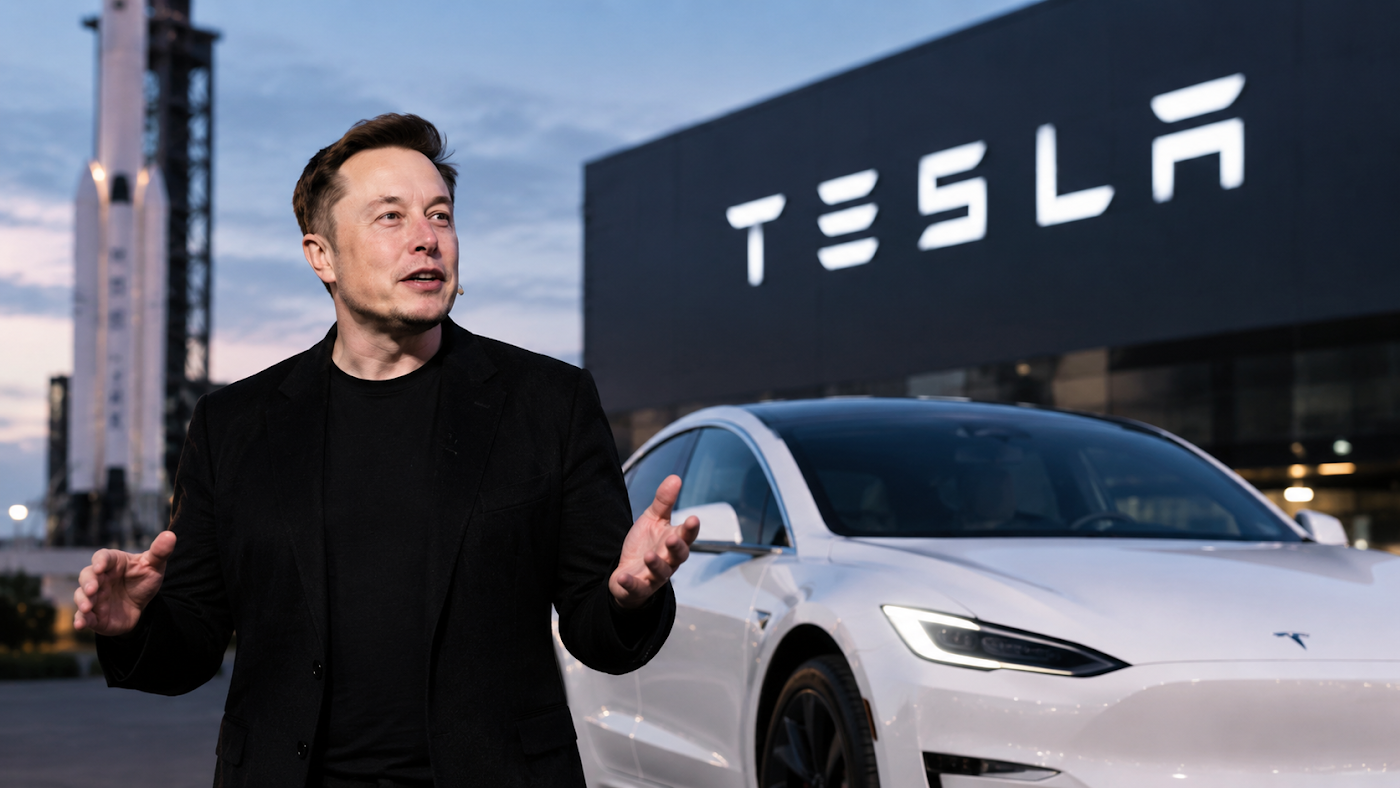
- Tesla (TSLA) fell after Elon Musk backed Anthropic CEO Dario Amodei's call to slow AI development. The connection is increasingly important for Tesla because investors place much of the company's future value on autonomous driving and robotics rather than its traditional EV business. Shares were down about 1.5% in early trading, while the broader AI selloff hit Nvidia and other AI-linked names as well.
The 10-year yield briefly crossed 5% and pulled back.
Stocks recovered from their session lows, but the bigger move was inside tech: AI infrastructure sold off while cybersecurity surged. Bank of America added a separate warning on capital-markets activity, while WTI held around $102 and Fed hike odds stayed near 90%.
Now the market gets Wednesday’s Fed decision.
The hike is heavily priced. The harder part is what Kevin Warsh says about the path after it.
FREE MARKET ALERTS
Know What’s Moving the Market Before You Miss the Move
Get market-moving news, analyst trade ideas, and key catalysts delivered directly to your phone so you can spot opportunities faster.