
The Nasdaq Hit a Record. The 10-Year Hit a 24-Year High. Neither Blinked. The Nasdaq closed at an all-time high of 27,477.31. The S&P 500 rose 0.7%, and the Dow added 0.2%. Under the index, the count ran the other way. By the afternoon, 281 Nasdaq-listed stocks had set 52-week lows against 87 highs. Lows have now beaten highs for 26 straight sessions. In bonds, the 10-year Treasury yield closed at 5.31%, its highest close since 2002. The 30-year rose to 5.66%. The 2-year barely moved, ending near 4.84%. No single headline drove the bond selloff. The ISM services prices index jumped to 74.0 in September, its highest reading since July 2022, and the 10-year dipped when it landed. The supply is still ahead. Treasury has three auctions this week: $58 billion in 3-year notes Tuesday, $39 billion in 10-years Wednesday and $22 billion in 30-years Thursday. TQ Trade Implication That is $119 billion of new supply in three days, with $61 billion of it in 10- and 30-year paper. Investors often cheapen bonds ahead of heavy issuance so new debt can clear. The open question is whether Monday's selling was that routine setup or the start of something larger. Thursday's 30-year sale is the cleaner read, since long bonds carry the most rate risk. Historically, Q4 Is the Strongest Quarter of the Year.And our just-updated free report — 10 Best Stocks to Own: Fall 2026 — identifies the 10 best-positioned companies to own right now. Including: - A high-yield dividend payer adding growth to their story
- AI companies monetizing the boom instead of just riding the hype
- A steady grower offering diversification for tech-heavy portfolios
- An American powerhouse growing domestically and expanding internationally
Plus six more companies turning growth opportunities into stronger fundamentals — setting investors up through year-end and into 2027. Get your FREE copy of 10 Best Stocks to Own: Fall 2026 here Two Markets Moved on No News. That Is Harder to Price Than Bad News. The ISM prices print was Monday's obvious hook. The 10-year ignored it, dipping to about 5.30% right after the 10 a.m. release. Then it climbed with nothing new on the tape. By early afternoon it touched 5.349%, above the 24-year intraday high of 5.344% set last Thursday. It gave back about 4 basis points into the close, settling at 5.31%. Prediction markets moved in the same window. Kalshi's October rate-hike contract sat at 17 to 18 cents through the ISM release, then started climbing at 11:24 a.m. A single 20,000-contract trade printed five minutes later. By 2:03 p.m. it was at 22 cents. No data release or Fed remark lined up with either move. Traders tend to read a move without news as positioning. It can run without fresh information, and it can stop the same way. The 10-year did both on Monday: a new high by early afternoon, then a retreat into the close. The pressure on holders is real. Investment-grade bond funds lost 3.7% in the third quarter, cutting their year-to-date gain to 3%. TQ Edge Setup Positioning moves can reverse faster than ones built on fundamentals. Monday's afternoon fade is a first hint of a ceiling, not proof of one. Wednesday's 10-year auction is the first real read on whether buyers show up near 5.3%. Weak demand would put last week's high back in play. Strong demand would say the late-day buyers weren't alone. The Curve Is Steepening. That Changes What the Selloff Means. The shape of the selloff changed around September 23. Before that, short-term yields rose faster than long-term yields, the classic sign of markets pricing in more Fed hikes. Since then, the 10-year has climbed more than 20 basis points while the 2-year has slipped about 4. When the long end rises and the front end holds still, the market is pricing growth and fiscal risk beyond the next Fed meeting. Fed officials are debating October. The long end is pricing years. Banks borrow short and lend long, so a steeper curve usually helps their margins. Yet the KBW Bank Index closed slightly lower. One reading is concern that long rates are rising fast enough to hurt credit quality and loan demand, eating into the benefit of a wider spread. Energy adds another thread. At an energy conference in London, the Petronas chief executive said the oil market faces "bedlam" through year-end "and maybe 2027." Asian economies are large holders of U.S. Treasuries. An energy-driven slowdown there could cut their appetite for U.S. debt, one more risk the long end may be pricing. This #1 stock for the next AI boom?
Behind the scenes, America's top AI scientists have been hard at work. They've been building a new category of AI-powered device so powerful… It'll trigger something AI scientists call an "intelligence explosion…" A sudden 360-fold acceleration in major AI-powered breakthroughs. That means it'd shrink AI breakthrough times from 3 years… down to 3 days. In the process, it's poised to spark a $100 trillion reset of the AI markets… starting THIS YEAR. That's why Louis Navellier believes this event could send certain AI stocks tumbling… While creating a new generation of AI millionaires and billionaires… Starting with the company he reveals here (down to the ticker) in his new presentation. This ad is sent on behalf of InvestorPlace Media at 1125 N. Charles Street, Baltimore, Maryland 21201. If you're not interested in this opportunity, please click here. Big bank earnings start next Tuesday. A steeper curve lifts net interest margins on paper. Whether third-quarter results show a real benefit depends on credit quality and loan volumes, which pull in opposite directions. Commentary on loan demand may say more about the long end than the margin figure itself.Two Buyers Agreed to Borrow. The Market Took About 10% From Each.Two companies announced debt-funded acquisitions on Monday. Investors paid the targets and marked both buyers down by about a tenth. Schneider Electric agreed to buy PTC (PTC) for $205 a share in cash, about $22.6 billion. Schneider will fund it with €16 billion to €17 billion of new debt and up to €6 billion of new shares. Buybacks pause in 2027 and 2028. Its shares closed down 9.97% in Paris. PTC closed at $192.26, 6.6% below the offer. Closing is expected by the third quarter of 2027, about a year out. On that timing, the spread pays roughly 6.7% a year, against about 4.84% on the 2-year note. C.H. Robinson (CHRW) agreed to buy RXO (RXO) for about $5.8 billion in cash and stock, a 29% premium. It will borrow against a bridge of up to $4.5 billion and pause buybacks after closing. S&P Global Ratings affirmed C.H. Robinson at BBB+ but cut its outlook to negative. It called $130 million of the $300 million savings target the higher-risk part. C.H. Robinson closed down 10.8%. RXO rose 22.5%. Because each RXO share gets 0.0856 of a C.H. Robinson share plus $17.25 in cash, the buyer's drop cut the offer's value to about $29.29. TQ Execution Bias Two deals don't make a trend, but they do set two prices to track. Schneider's share sale and C.H. Robinson's permanent financing will show what that debt costs. 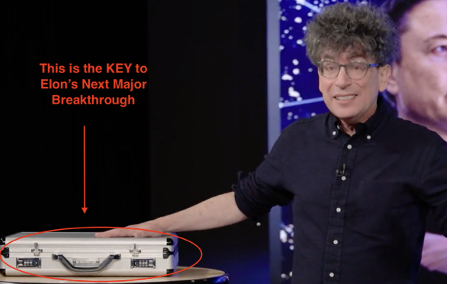
Renowned tech investor James Altucher – the man who called the rise of Nvidia, Apple and SpaceX years in advance – just uncovered Elon Musk’s latest breakthrough idea… And according to James, it’s going to be even bigger than the SpaceX IPO – creating up to 1.8 million new millionaires over the coming years. The pieces behind it are inside this briefcase – which he reveals 100% FREE in this video. Click here now for all the details. - OKXICE, a joint venture of Intercontinental Exchange (ICE) and crypto exchange OKX, filed with the SEC to trade tokenized versions of 63 U.S. stocks around the clock. The list includes Nvidia (NVDA), Apple (AAPL) and Microsoft (MSFT). Each company has 30 days to object, and Cerebras already has.
- Centalion, the trader formerly known as Gunvor, bought Haynesville gas assets from Silver Hill Energy Partners for about $1.5 billion, The Wall Street Journal reported. The fields produce about 300 million cubic feet of gas a day. A trader buying wells rather than cargoes is making a multi-year call on U.S. gas.
The Bond Market Sold Without a Catalyst. The Nasdaq Set a Record Anyway. Both happened on the same day, and neither cancelled the other. Tech is trading as if rates are someone else's problem. Bonds are trading as if that confidence is the problem. The ISM print didn't move yields when it landed, and the auctions haven't started. The 10-year still set a new intraday high before easing to 5.31%. Wednesday's 10-year auction is the first test. If buyers step in near 5.3%, the selloff can pause. If they do not, the bond market keeps moving on its own clock, and the Nasdaq record looks like a confident bet on one specific outcome. 3 STOCKS OUR SIGNAL ENGINE SAYS TO WATCH CAREFULLY Three stocks. Three signals. Two weeks later, the story changed.On September 2, we published three market questions around KLAC, HPE and PG&E.
Two weeks later, every one of them produced new evidence. One company delivered record revenue and raised its outlook.
Another saw weakness spread across its entire peer group.
And in the third, a market risk that had only been showing up beneath the surface suddenly became explicit.
Yet none of these stories is finished. That’s why we built Market Tell.
To track the signals that keep moving after the headline is gone — and show you what investors should be watching next. We’ve put the latest analysis into a new FREE Special Report:
3 Stocks at a Major Turning Point See what changed… what still hasn’t been resolved… and the signals we’re watching now. Get the Free Report → |
|